An Experience in the Creation of Spiritual Spaces
by Bill Birdsell, Architect OAA, FRAIC
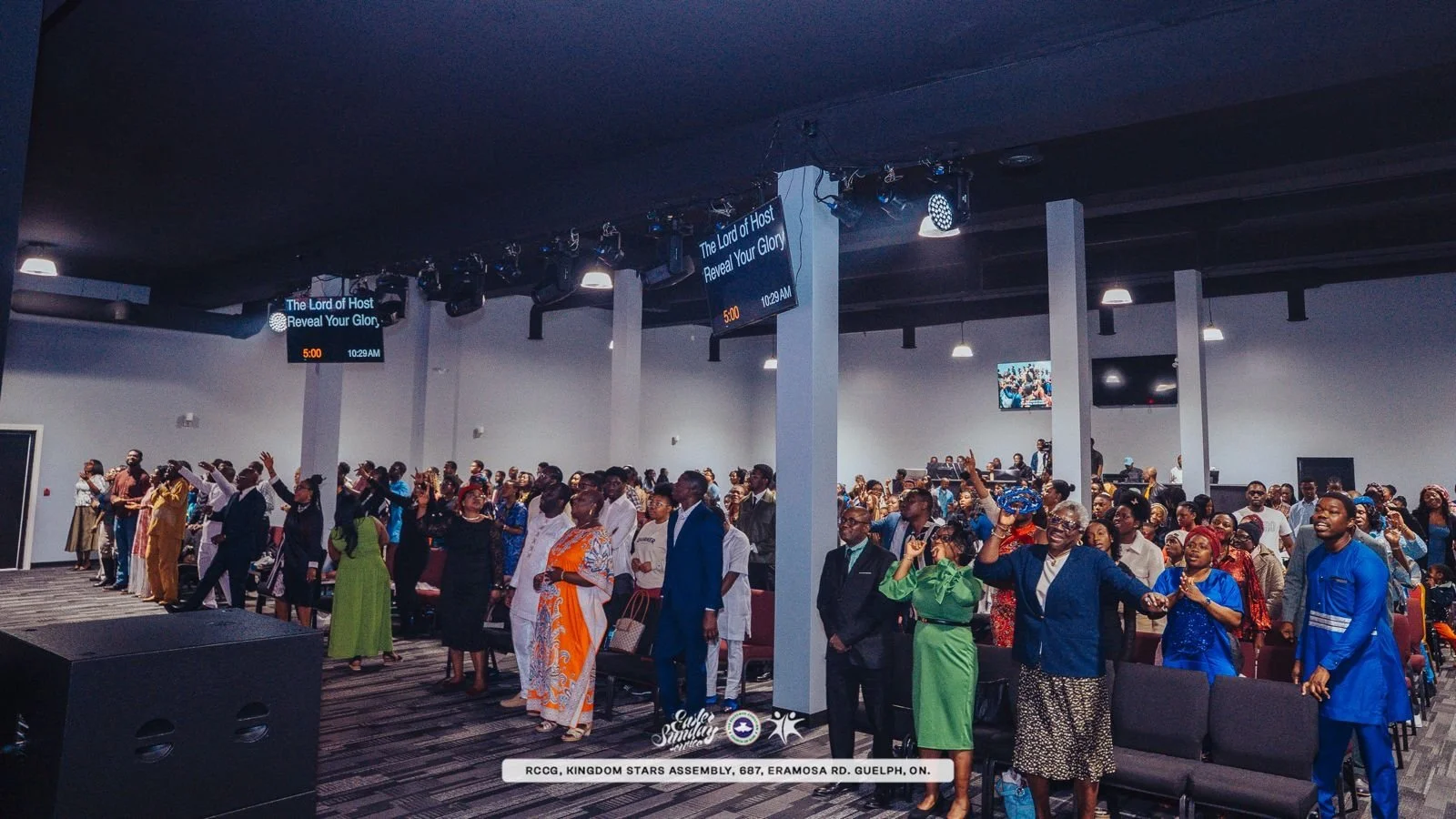
Kingdom Stars Assembly. Photo: David Adeosun, PhD, Lead Pastor.
Throughout my career, I’ve been the architect for the construction, renovation or renovation/addition to over a dozen houses of worship. It always begins with a basic conversation between me and the community leader(s). I’m there to listen and understand them and their needs. They are there to see if I am the appropriate person to guide them into the world of design and construction. Most importantly, will we be able to live together and maintain trust and respect?
I’ve come to understand that no matter how many structures I’ve helped to create, each one is unique. In the case of a place of worship, it’s an act of faith by an entire community, and a journey that can take many years.
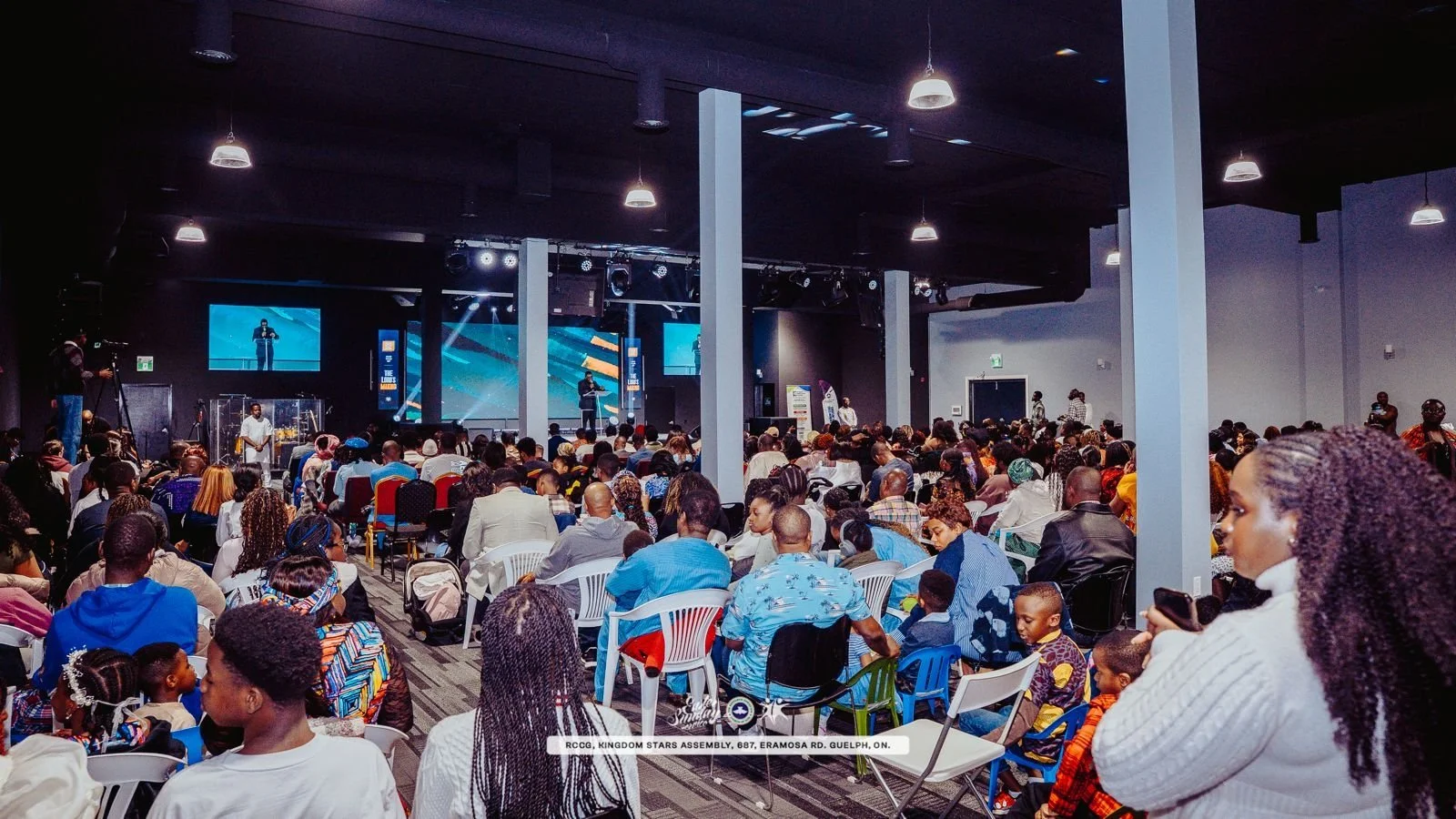
Kingdom Stars Assembly. Photo: David Adeosun, PhD, Lead Pastor.
It’s the community that best understands the organization, the spatial requirements and the type of structure that they need. To satisfy these essentials, it’s especially important to understand and accommodate the “language” of the religious practices—ritual, iconography and decoration—to be expressed on the structure and the space within. In all cultures, this language has evolved and been refined over time—sometimes on a global scale, but with differences expressed by each small community. This explains why even in small towns there may be many distinct religious structures.
The religious community structures that I’ve been involved with have included many different forms of religious observance: churches, chapels, mosques and gurdwaras (“gateway to the guru”), to name a few. For these last two, my job was to guide their designers through the practicalities of building and administration of construction. I learned as I went, sharing meals of cultural significance as part of their community. Included in this group of religious structures are affiliated schools, daycares and even legion buildings—things that share a special commonality of support and a belief in a “higher power.” Not all religious spaces are spiritual spaces.
It’s the gathering together of the community that transforms the experience of the space into a spiritual one.
I’ve always tried to listen to the leaders of the community and faithfully execute their vision of a space appropriate to their needs and desires. Early on in my journey, I didn’t always get it right. In some cases, my own vision got in the way of listening. The process takes a lot of conversation and at times my clients prematurely accepted a design that was only a reasonable expression of their needs, like settling for clothes off the rack, instead of custom tailored or, in architectural terms, occupying a house designed for a mass market, rather than a custom home. Still, once the religious community occupied the space, they made it their own, through reorienting it and introducing cultural objects of importance to their religious practices.
I’ve created many religious buildings and public buildings containing significant rooms for the gathering of likeminded community members. I’ve used all the techniques at my disposal, but all these buildings and spaces require the coming together of community with the power, through collective wisdom and support, to unlock new sources of identity, energy and creativity.
For millions of years of prehistory, humans adapted to living in small groups of no more than a few hundred people. These small collectives shared a location and, more importantly, a sense of purpose and belonging to something greater than themselves. In some cases, this was expressed in the form of a higher power: God or gods. Through collective wisdom, accountability and support, the community acquired their own sense of power.
Since the industrial revolution there has been a slow disintegration in the Western world of traditional religious communities and unique groupings of people. In Canada this has left many churches vacant and open to adaptation for new uses.
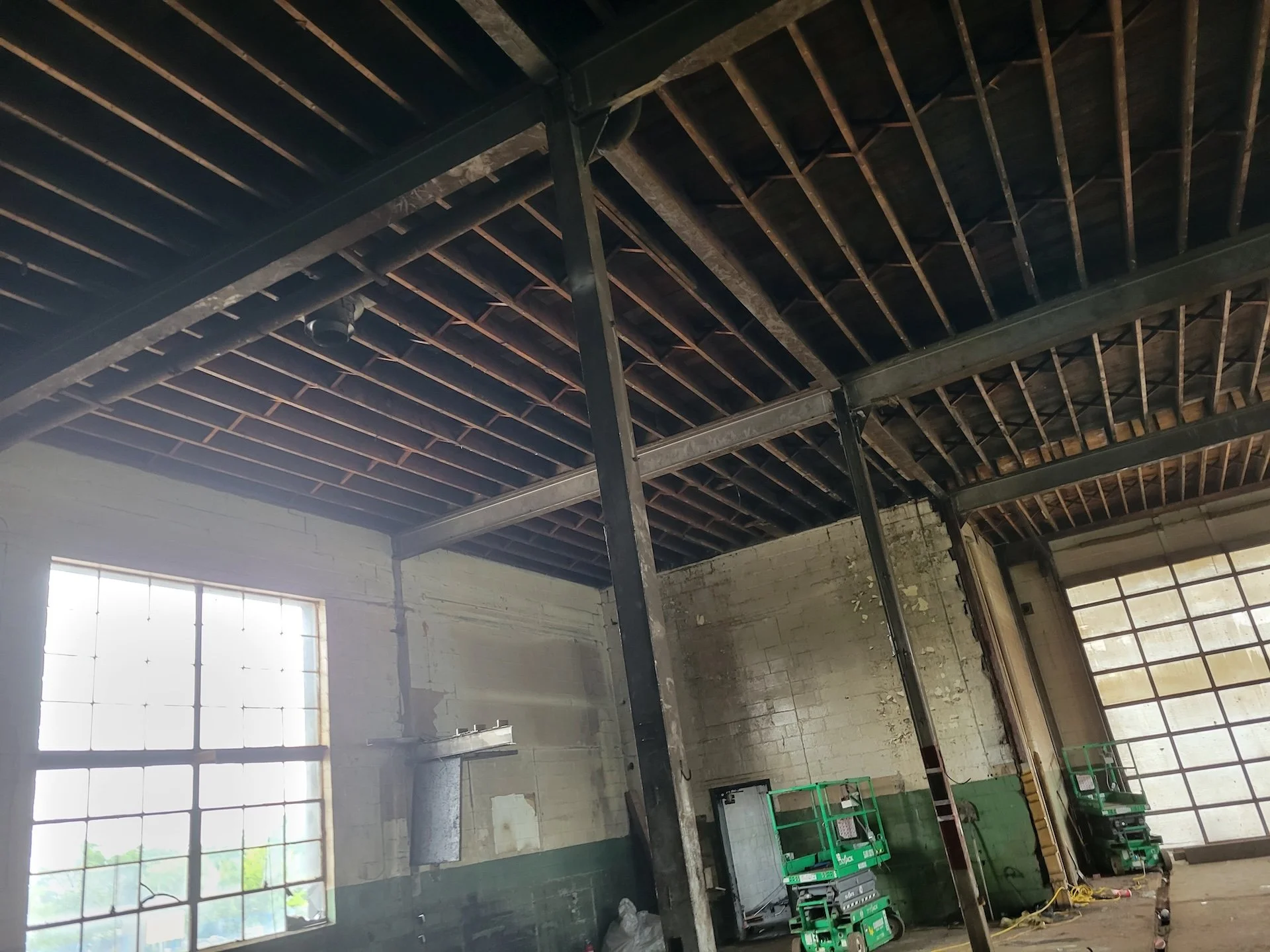
The space as the architect found it in 2025. Photo: Bill Birdsell.
As a result, I’m frequently asked to oversee the conversion of a church to suit the requirements of a different religious group. The community leaders may want to limit the municipal approval process or maintain a tax-free status. In some instances, these conversions have embraced technologies and practices not intended by the original church designer or congregation. Now, new congregations even occupy units within shopping malls because of constraints set out in zoning bylaws. The limitations of money or the influence of authorities having jurisdiction are certainly not spiritual concerns although they can be just as important to a group trying to find a home.
At other times, I’ve helped with the conversion of a religious building to another use altogether. As an experienced practitioner in the adaptive reuse/refit of structures, I’m aware that what often drives these conversions is changing land-use designations and real estate values.
These days, there are many grand spaces that express power through monumental architectural and engineering gestures and cultural storytelling. They might represent amazing technological feats, creating large dramatic rooms to host spectacles such as momentous sporting events, Taylor Swift concerts and grand religious gatherings. Such spaces can create a sense of awe and wonder, but they are not necessarily spiritual spaces.
As an example from my own experience, Rome’s Saint Peter’s Square, which measures 320 metres long and 240 metres wide, and can accommodate 300,000 people, employs all the theatrical techniques, urban essence, proportional harmony, material longevity, and cultural story telling through huge statues and religious iconography that Gian Lorenzo Bernini could muster in the 17th century.
I’ve stood there when it was empty and felt no spiritual awakening. I’ve also been there when it was filled with people and been carried away by emotion and a shared heritage as a member of a gathering of Christians.
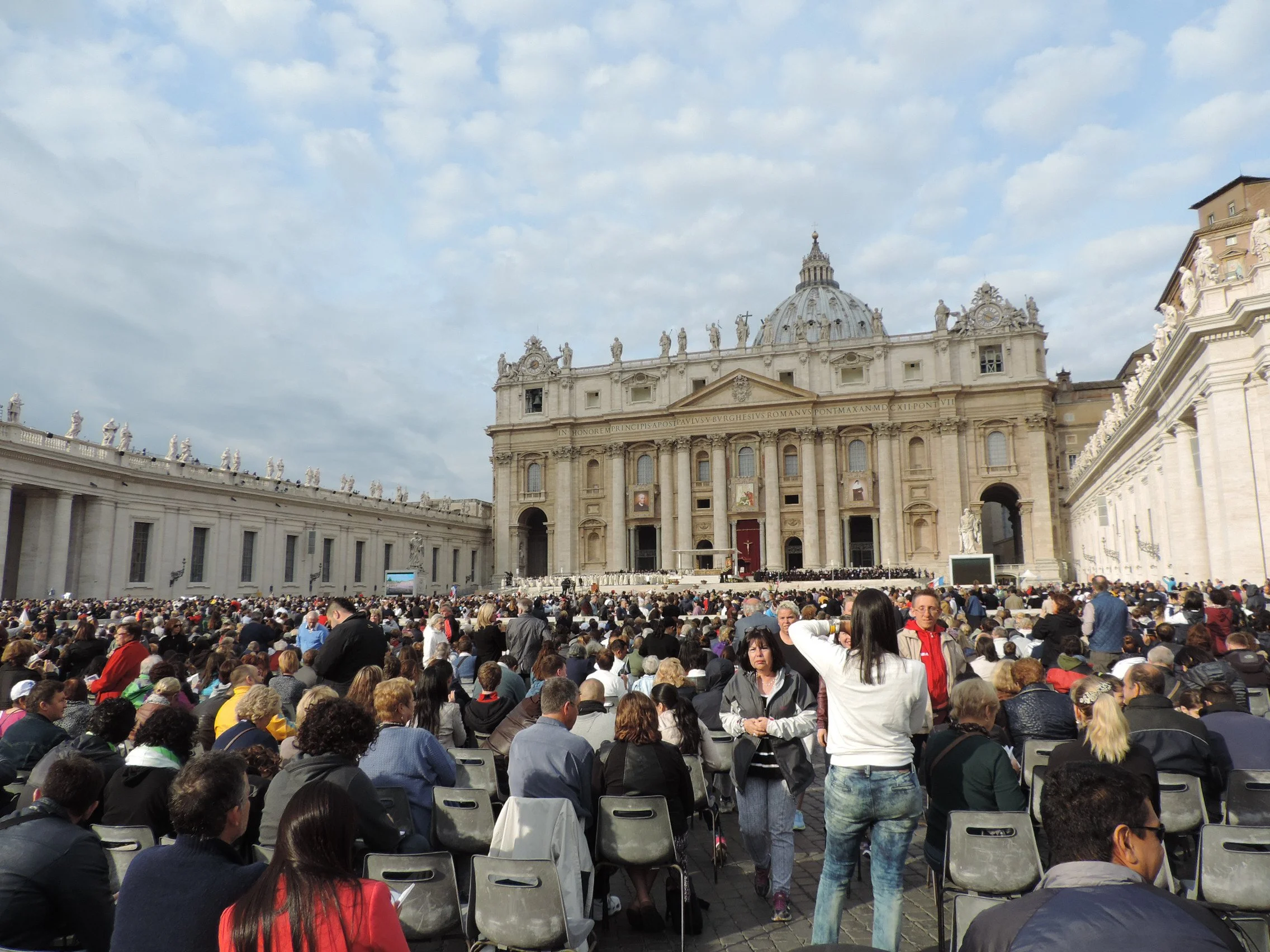
St. Peter’s basilica plaza during a canonization ceremony. Vatican City, October 2015. Photo: PxHere, public domain.
It seems to me that the spirituality of an environment comes from three sources: first, the community that seeks a space to accommodate their religious practices, second, the architect or designer who creates the space to accommodate and facilitate these practices, and third, the religious community itself that gathers to experience the sense of belonging to something greater than themselves. I am grateful that, in my career, I’ve been instrumental in creating many such spaces.