ONE GLOVE: ANOTHER GLOVE STORY
Lost Gloves and Urban Spaces
by Gordon S. Grice
It seems paradoxical, but large crowded cities can be very lonely places. And sometimes, the loneliest places are public spaces: areas that have been designed to bring people together. Unfortunately, for many people, those same spaces just reinforce a sense of isolation. Invisible and ignored by everyone around them, people can become lost in plain sight. It’s called “urban loneliness,” and, according to statistics, Toronto is the loneliest city in Canada.1
Loneliness, described as the "hidden epidemic of the 21st century," has become a fundamental challenge in urban societies. Despite its multifaceted consequences, there is a research gap in the systematic analysis of the role of urban planning in exacerbating loneliness. — Journal of Urban Studies on Space and Place.
For me, nothing epitomizes this sense of urban loneliness more than a lost glove. Lost, in the sense of “lacking purpose or direction,” “without attachment,” “overlooked and dismissed,” the lost glove, like the lost person, is adrift.
When I started this project, I wasn’t thinking about urban loneliness. I was taking advantage of the city’s public spaces just like everyone else, minding my own business, strolling on the sidewalk or through the park, going to the gym or walking the dog. Then I started noticing them. How could a person not notice them? They’re right there, alone, on the sidewalk, the perfect outline of someone’s hand, waving for attention, surrounded by people going about their business, and paying them no mind. Some of them seemed to be almost animated, like they were beckoning or reaching out for something; some were shrivelled up, as though embarrassed by their sad fate; others were trying to hide, half-covered by leaves, abandoned, trodden or surrounded by garbage.
Alone and exposed in a public space—a personal object that is the exact replica of the hand that it once encased—the glove is now alone, but not forgotten. It has left its mate behind in a pocket or purse as a useless reminder. That makes two lost gloves: one homeless, the other tossed into a drawer, hoping to be reunited someday with its missing partner.
I started photographing lost gloves. Once I started, I found it impossible to stop. And as I became attuned to seeing them, I began finding them everywhere—newly lost, or previously noticed, now kicked aside, snowed on, or driven over. Some lost gloves stuck around for a day or two. Others hung around, seemingly forever.
Here’s another paradox. I’m not alone in this strange obsession. There is an entire online community of people with the same fixation: blogs and websites devoted to lost gloves. Some of them invite readers to send their own lost glove photos, adding to a deluge of images from all over the world: a collective of loneliness. Trust the internet to uncover and encourage one more marginal community of people with strange infatuations.
•••••
Just as surprising, no two people have the same way of thinking about lost gloves. Where I see loneliness in public space, other people draw different—sometimes even weirder—connections.
In an interview with Conan O’Brien on TBS, the actor Tom Hanks describes his obsession in terms of romance and narrative:
There’s a story behind them all. What happened to its mate? . . . is someone going to keep the other glove at home in the off chance that they’re going to pair it up? It has a little bit of a Romeo and Juliet quality to it.”
In the interview, Hanks and O’Brien discuss some of the actor’s lost glove photographs, ad-libbing a story for each of them. In one instance, a lost glove in a parking lot appears to have been staged by someone who knew of Hanks’s interest in lost gloves and hoped he would photograph it, which he did. He apologized for transgressing the unwritten rule of lost glove photography: You never stage the glove or rearrange it.
David Farrier, in his essay “Hand in Glove” describes his very first lost glove experience, as a reminder of an alienating experience that all of us experienced—the COVID lockdown:
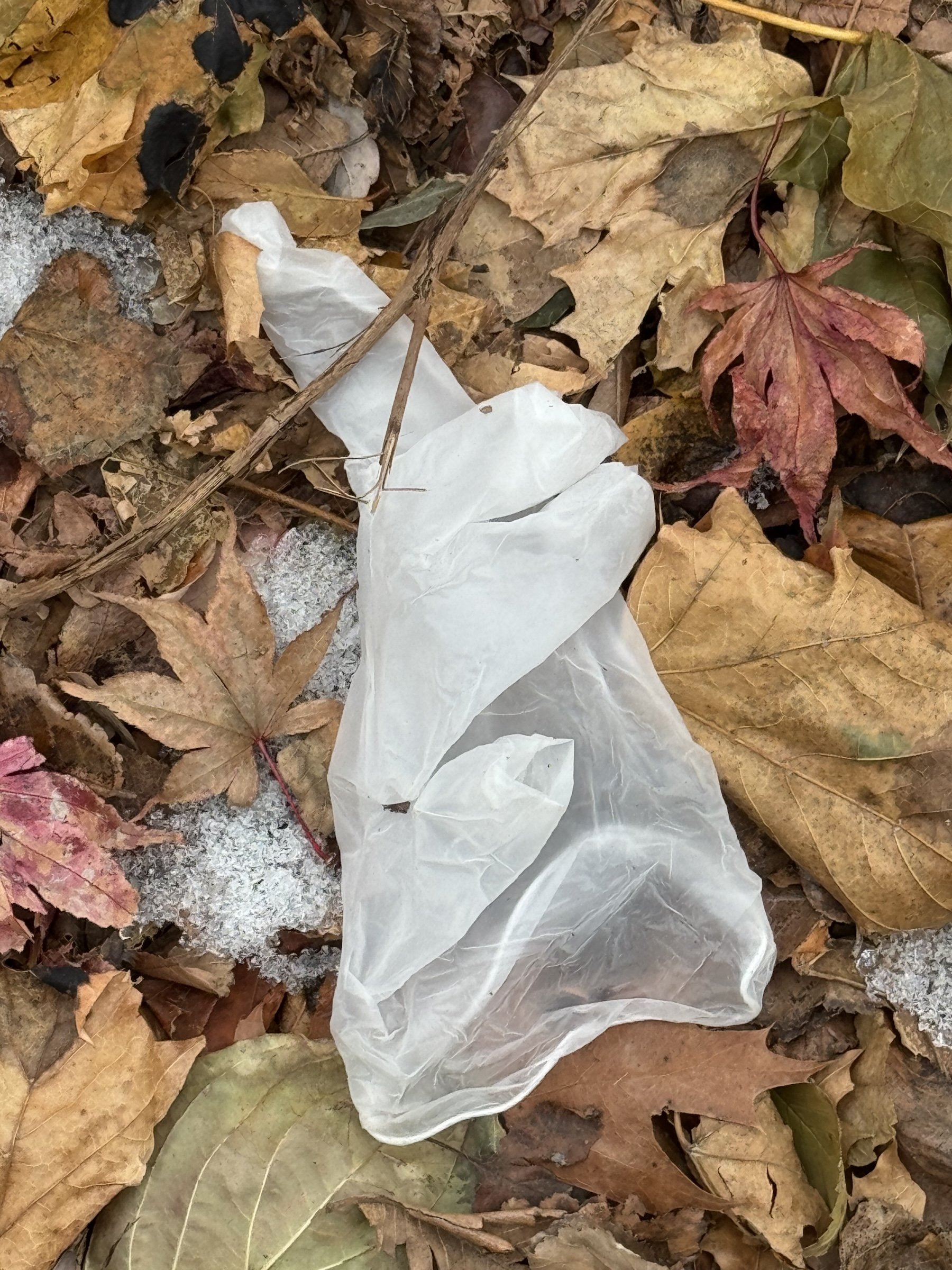
Image by author
The first one I saw was on the path outside my house: a single white plastic glove, the fingers curled inward like a sleeping animal. This was in the early days of lockdown, when the world seemed to have shifted in ways for which we weren’t yet able to account.
For Troy Patterson, writing in The New York Times, “The Lost Glove Waves Farewell to Winter,” it’s a question of human frailty:
We care about the forgotten hat, because its absence exposes a larger carelessness. The lonely glove parted from its fallen partner is a lonely memento of fallibility. You can’t bundle up against human nature.
New York City software designer Summer Bedard has a fascination for found art of all types. According to a New York Times article, “I Found Your Mitten,” “Since sometime around the blizzard of 2010, Bedard has invited the general public to document gloves and mittens discovered on the street.” To Bedard, there is a humorous side to the whole thing: “I think I just saw an opportunity to turn tragedy into comedy,” . . . “I like projects that capture the mundane.”
To writer-illustrator-editor Genevieve Walker, discussing André Breton’s 1928 semi-autobiographical Surrealist text Nadja, In her essay, “Consider the Lost Glove,” a lost glove is “decisive.”
The glove is very important to this story. Its most significant appearance is at the Surrealist Headquarters when a woman André knows is asked to leave one of her own lovely sky-blue gloves behind. . . . “I don’t know what there can have been, at that moment, so terribly, so marvellously decisive for me in the thought of that glove leaving that hand forever.”
Further on in the essay, Walker introduces Johanna Malt, who relates lost objects to the surrealist movement. Like Marcel Duchamp’s urinal, the lost glove assumes its own identity, separate from its intended use. Writing in Obscure Objects of Desire: Surrealism, Fetishism, and Politics, that “The Surrealist glove, . . . is created by its relation to its environment, both shaping the space and filling it,” to which Walker later adds:
By virtue of ergonomic functionality (like the glove) or design (like the bicycle frame’s triangle) or simplicity (like the paper clip), everyday objects integrated into our daily lives become lost to us. It’s not until we come upon them out of context that we see them, the displacement forces us to reconsider the object’s purpose, and then we, too become rearranged somehow, different, in relation. The lost glove is more visible than the pair.
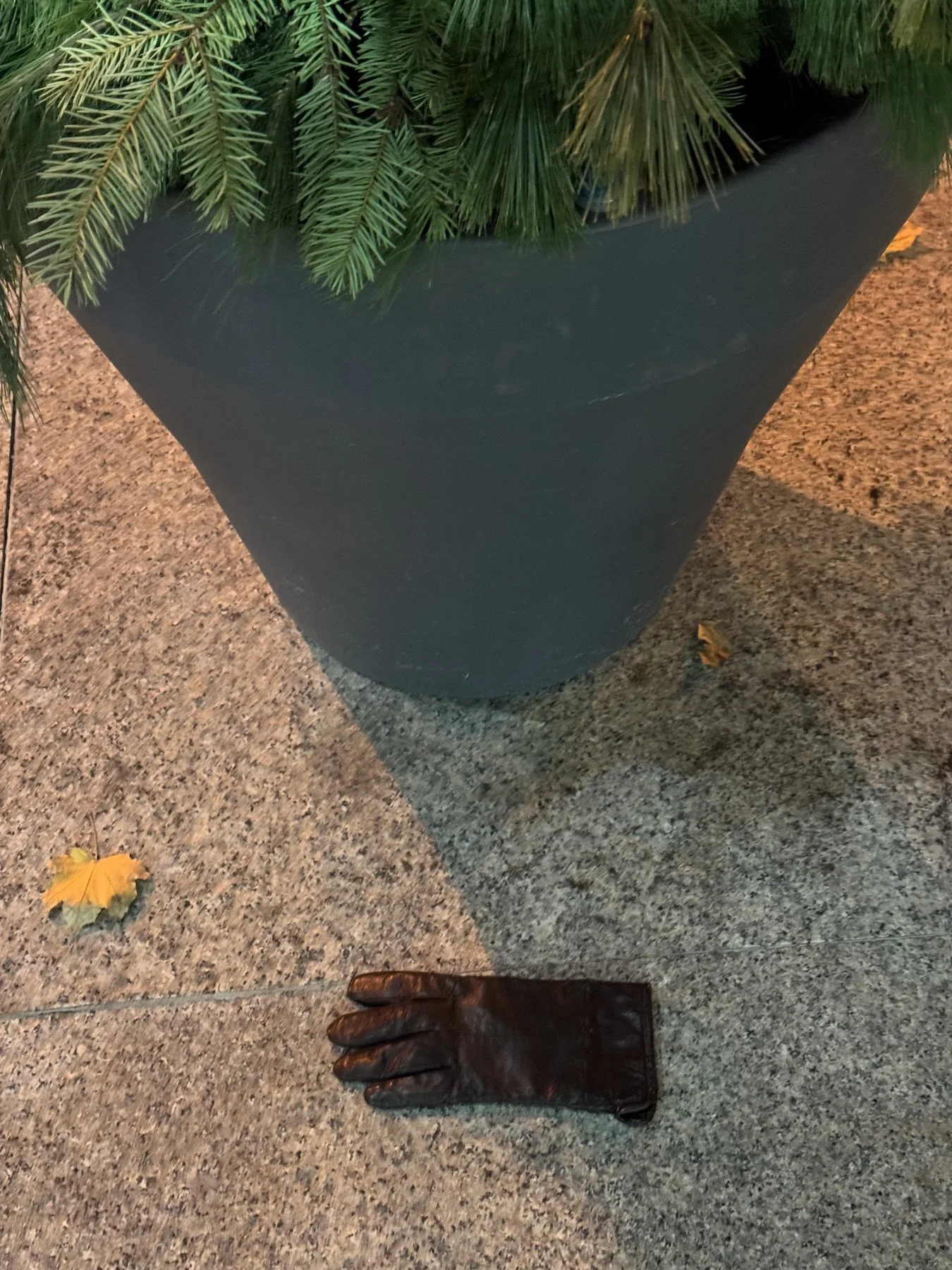
Image by author
Echoing some of my own feelings, but with research to back it up, cognitive scientist Alexandra Horowitz, in an interview with Nick Paumgarten for the New Yorker, makes some especially poignant observations. Quoting Horowitz, Walker writes, “The melancholy of a lost glove sitting in the middle of a sidewalk struck me as minorly tragic, for the glove and for its owner.” Based on the statistical results of her research, Horowitz hypothesizes:
“It’s what I call active loss. The glove isn’t just falling away; the owner has removed it to do something with the dominant hand: dial a phone, dig for change, shake someone’s hand. In the cognitive distraction of paying or meeting someone, the glove gets lost. Given that for most people the dominant hand is the right, they’re more apt to lose the right glove.”
LAST WORD
The last word belongs to Vladimir Nabokov, the Russian-American novelist-poet who knew more about loss than most of us can imagine. As an exile from three countries, successively, tsarist Russia, Nazi Germany and occupied France, Nabokov experienced loss, firsthand—country, culture, community, family and friends. But when he wrote about losing a glove, because he had always recovered from his losses and possibly benefited from them, he saw it as a positive experience. In his heroic poem Pale Fire, his character Charles Kinbote—an exile, like Nabokov, and possibly the author’s fictional alter-ego—offers a proverb from his homeland. “The lost glove is happy,” Kinbote says, qualifying this by adding that “‘happy’ is something extremely subjective.”
To Nabokov, the lost glove represents freedom,2 with the caveat that “happiness” needs to be more carefully defined. But happiness is always subjective, so maybe, it’s the word “lost,” that needs to be reconsidered, especially as it relates to a lost glove. Nabokov was a “classical liberal,” who believed in individual autonomy and personal freedom. For Nabokov’s Kinbote, the lost glove is happy because it has lost all its obligations. It has thrown off its shackles. Its fate no longer relies on its owner, or its attachment to its partner. It is untethered and free, just as every piece of clothing that has ever been lost—shoes or socks or hats—is free.
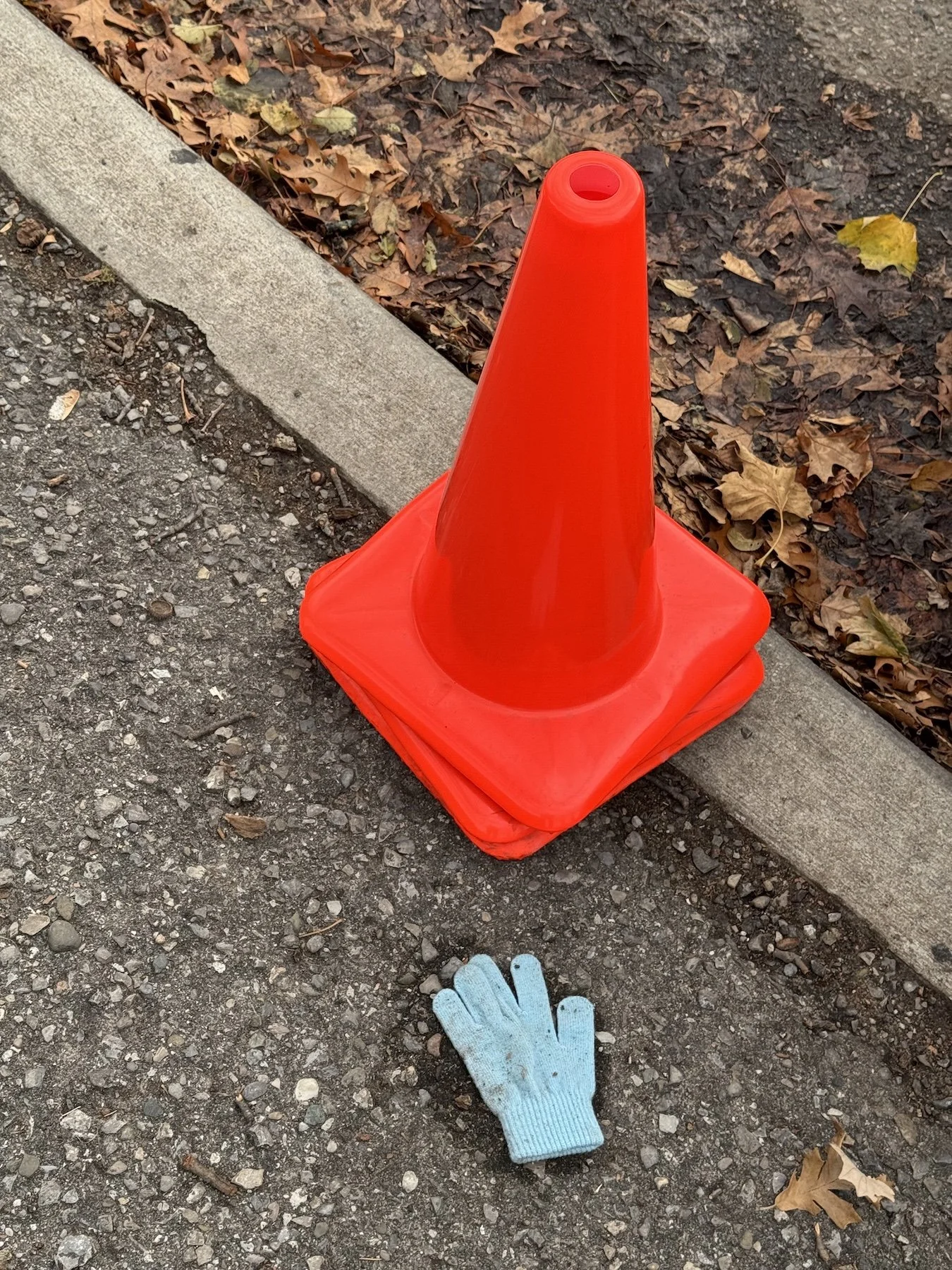
Image by author
This all sounds fairly positive. The lost glove, exposed in a public space, unattached and disengaged, is free to establish its own identity. Although separated from the hand that once gave it life, it can still speak to us. But what is it saying? Hey, over here? Please help me? Why is everyone ignoring me?
Which raises the question: Do freedom and liberation necessarily imply happiness, however it may be defined? If so, then the lost glove is a happy glove: solitary but content.
Whether we think of a lost glove as representing romance (Hanks), alienation (Farrier), frailty (Patterson), tragicomedy (Bedard), decisiveness (Walker), surrealism (Malt) Melancholy and tragedy (Horowitz) or happiness (Nabokov), the fact remains that the glove is still lost —except that by stopping to notice these lost gloves, capturing their image and thinking about them, the gloves have been found—not in the conventional sense of returning them to their owners, but in a more universal sense, by introducing them to you, dear reader, and giving them a significance that they could never have realized as someone’s personal property. They are no longer disconnected or hollow because they have been seen and appreciated.
A lost glove and a lonesome urbanite, it would seem have the same goal in the end—not to be “found” in the usual sense, but to be noticed, to be acknowledged and allowed to express their individuality. Or maybe not. Maybe they’re just lost souls: empty, disconnected, lacking purpose and alone in a crowded space.
If you’re tired of being alone and you’re ready to join the movement, check out the Lost Glove Society: “researching inter-dimensionality transference through the use of lost gloves. An organisation which has carried out vital work since 1958. Founded by maverick physicist, Frank Bourne.”
Urban loneliness means reimagining cities instead of abandoning them. In urban planning emotional infrastructure must precede physical development. This involves creating spaces for lingering, listening, and belonging.
— The Paradox of Proximity: Exploring Urban Loneliness: https://www.citiesforbetterhealth.com/latest-news/the-paradox-of-proximity-exploring-urban-loneliness.html
•••••
BETTER TO HAVE GLOVED AND LOST
Images by Author
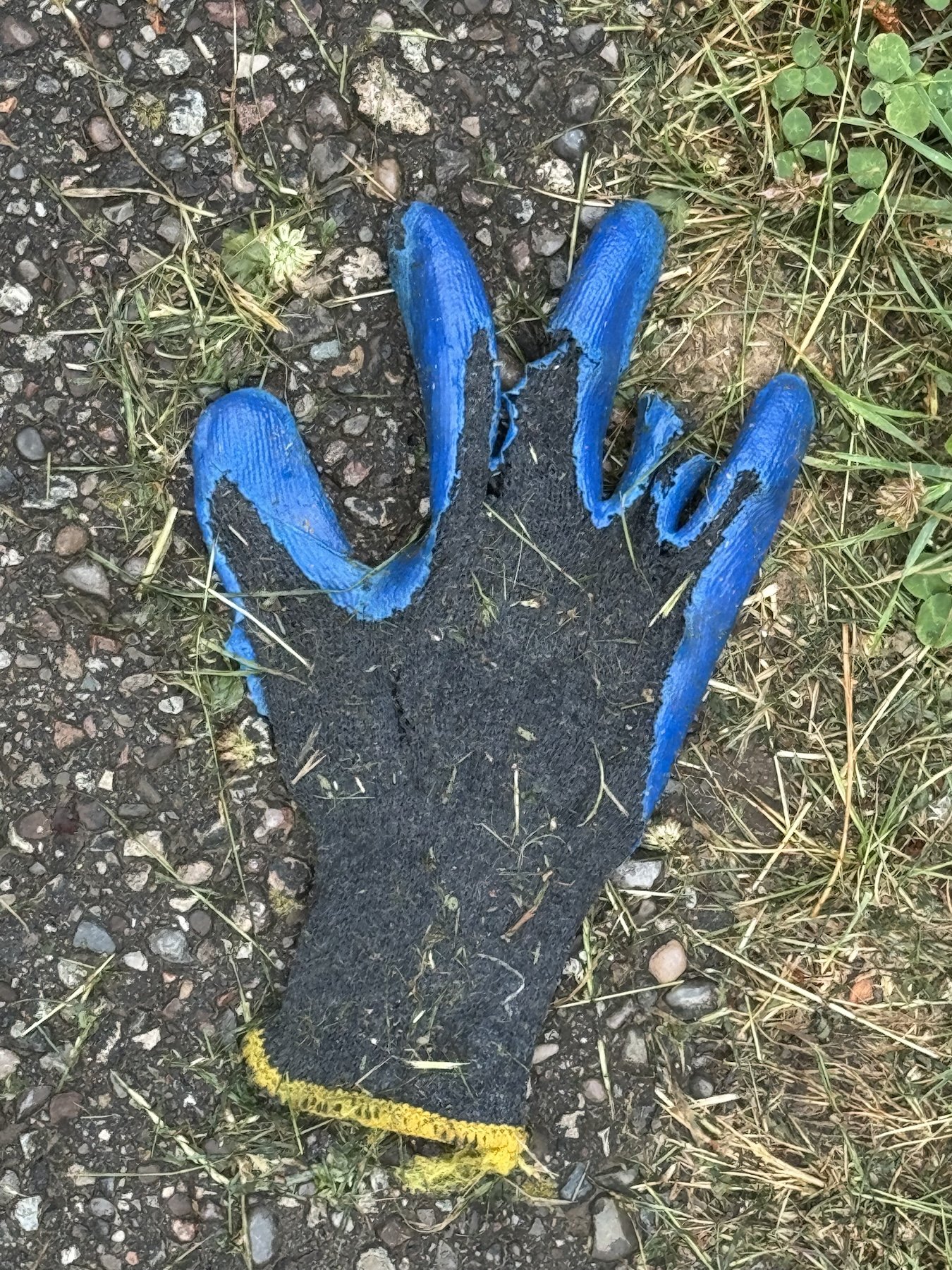
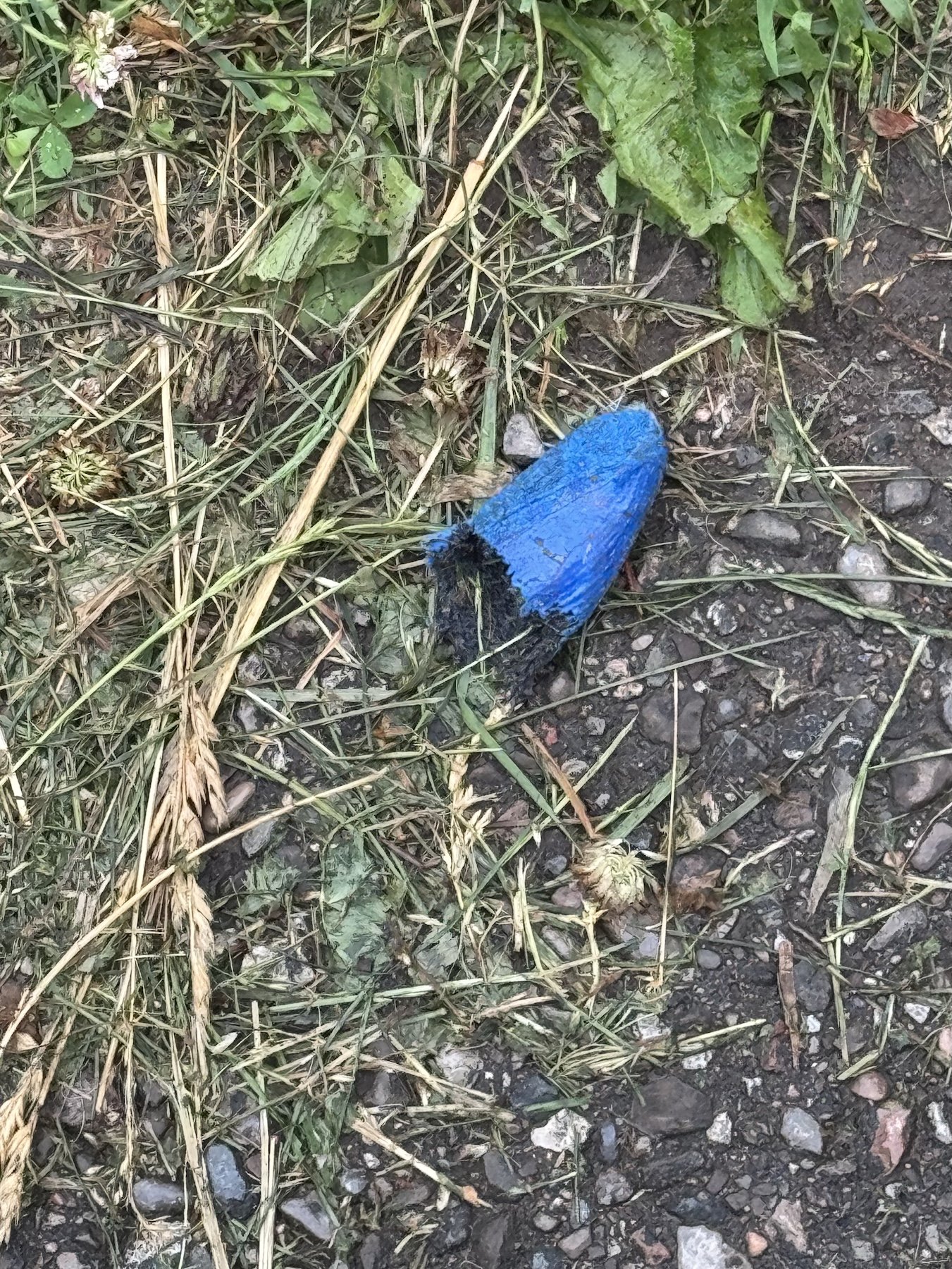
From my gallery of lost glove photos, I offer the following dramatic examples (Images by Author):
WORK GLOVES
Work gloves are a year-round thing. Whether it’s gardening, bricklaying, or handling hazardous material, hands may need to be protected. Putting on work gloves is like rolling up your sleeves: you’re ready to dig in. This glove was abandoned next to a paddleball court, where some roofing work had recently been done. To make matters worse, not only was it separated from its mate, it was also separated from one of its fingers. Ouch.
But here’s a twist. There’s a “one-glove” rule, which that states that if you transport hazardous materials, you should use one glove to carry the items, and an ungloved hand to touch common surfaces, thereby avoiding contamination. So, in this case at least, one glove is the norm. Another case is baseball.
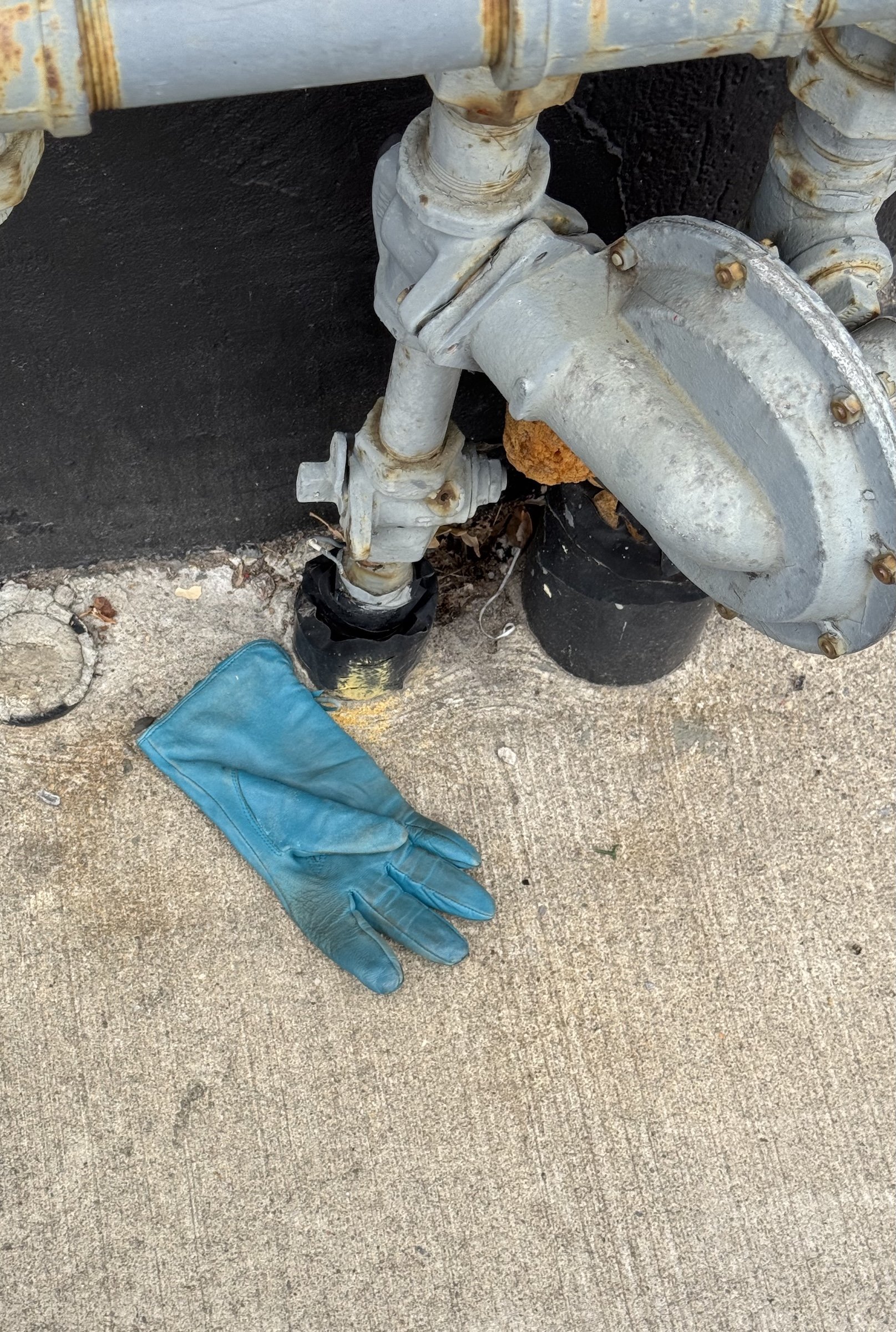
Image by Author
DRESSY GLOVES
What could possibly have happened to this delicate blue leather glove. Is this maybe the reincarnation of the “lovely sky-blue glove” that André Breton’s character obsesses over? At one time, this glove, matched with a colourful scarf must have been a striking accessory. Yet, here it is, having performed some dirty task, abandoned next to some rusty pipes. How did this happen?
To "handle with kid gloves" means to treat someone or something with extreme gentleness, care, and tact.
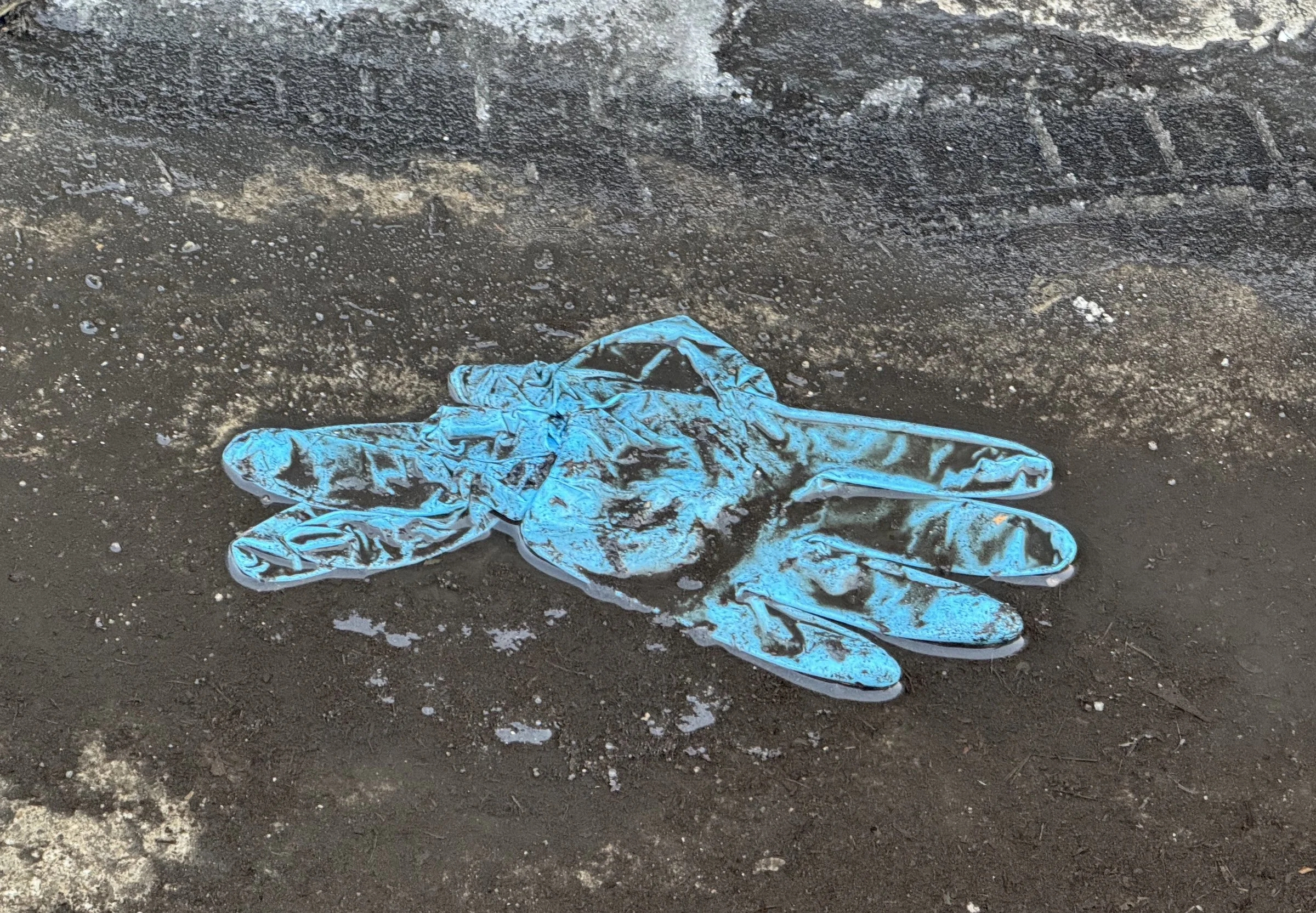
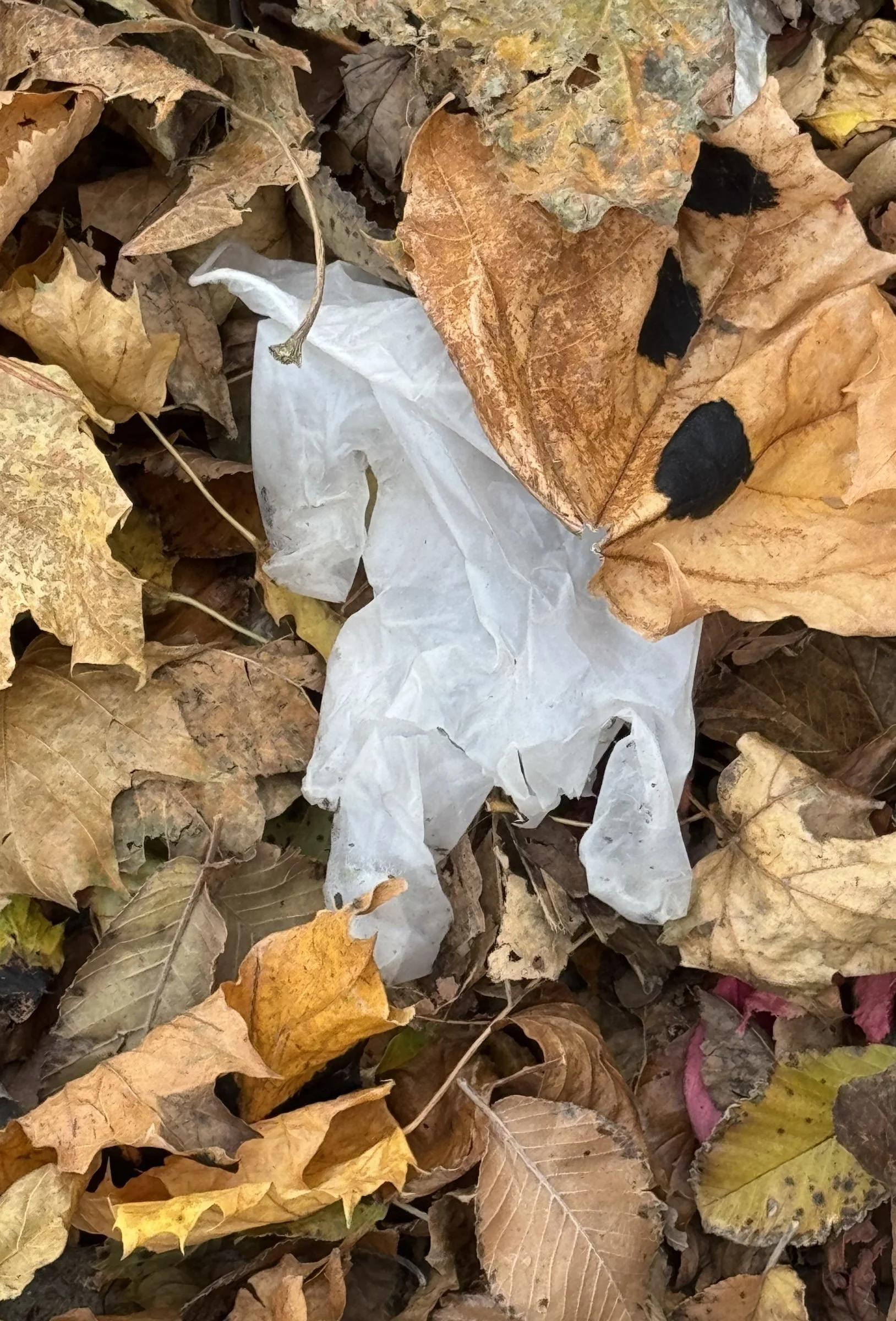
PROTECTIVE GLOVES
Images by Author
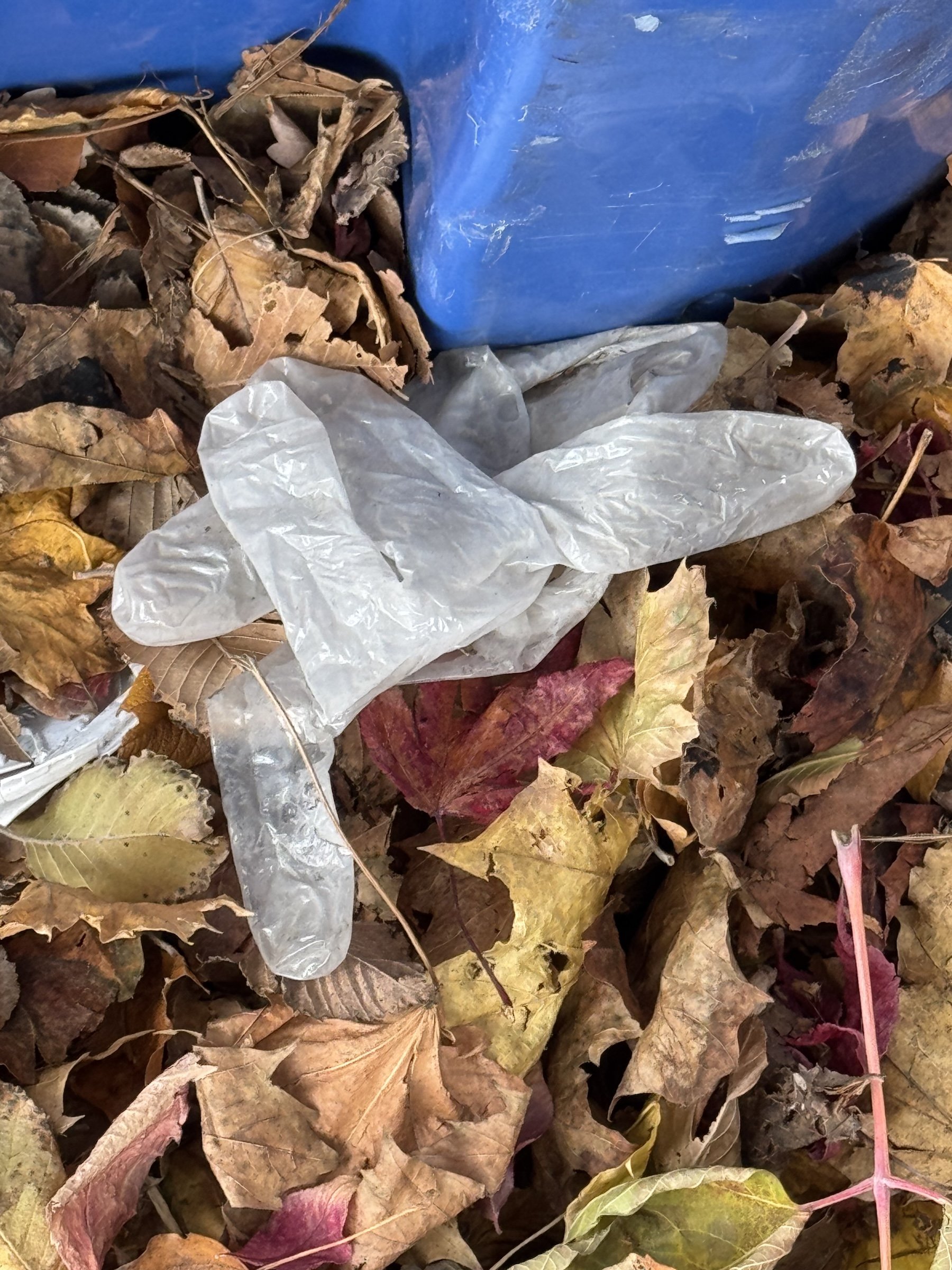
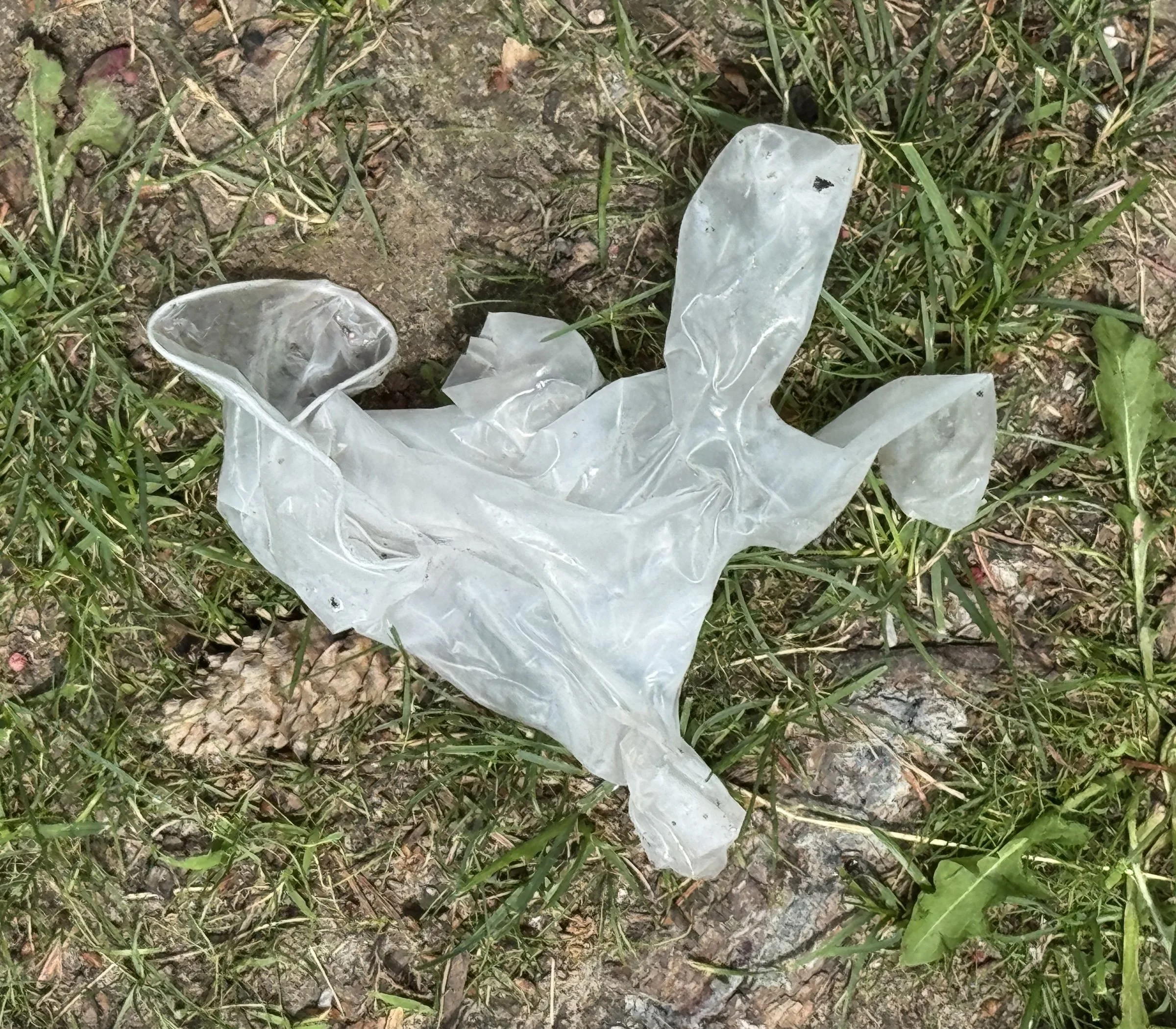
Remember the COVID lockdown? In Toronto, it lasted 777 days, from March 2020 until May 2022 (the longest lockdown of any major city in the world). It was an alienating experience like no other, but the city’s outdoor public spaces, experienced intensive use because they were the only places to maintain contact with other people—provided that we honoured their two-metre sanitary kinesphere and agreed to shout at to them through a protective mask. That sense of isolation still haunts many of us. And as a handy reminder, or homage, as if we needed one, there are sanitary gloves everywhere—not really lost, but discarded and abandoned, singly, or in pairs, or even in groups. The gloves are thin and weightless, so they can assume almost any configuration, displaying a kind of choreography all their own: twisting, dancing and gyrating.
the Lord urges us to “wear gloves” when reaching out to help those who need cleansing from sin. . . . Keep watch on yourself, lest you too be tempted” (Gal. 6:1).
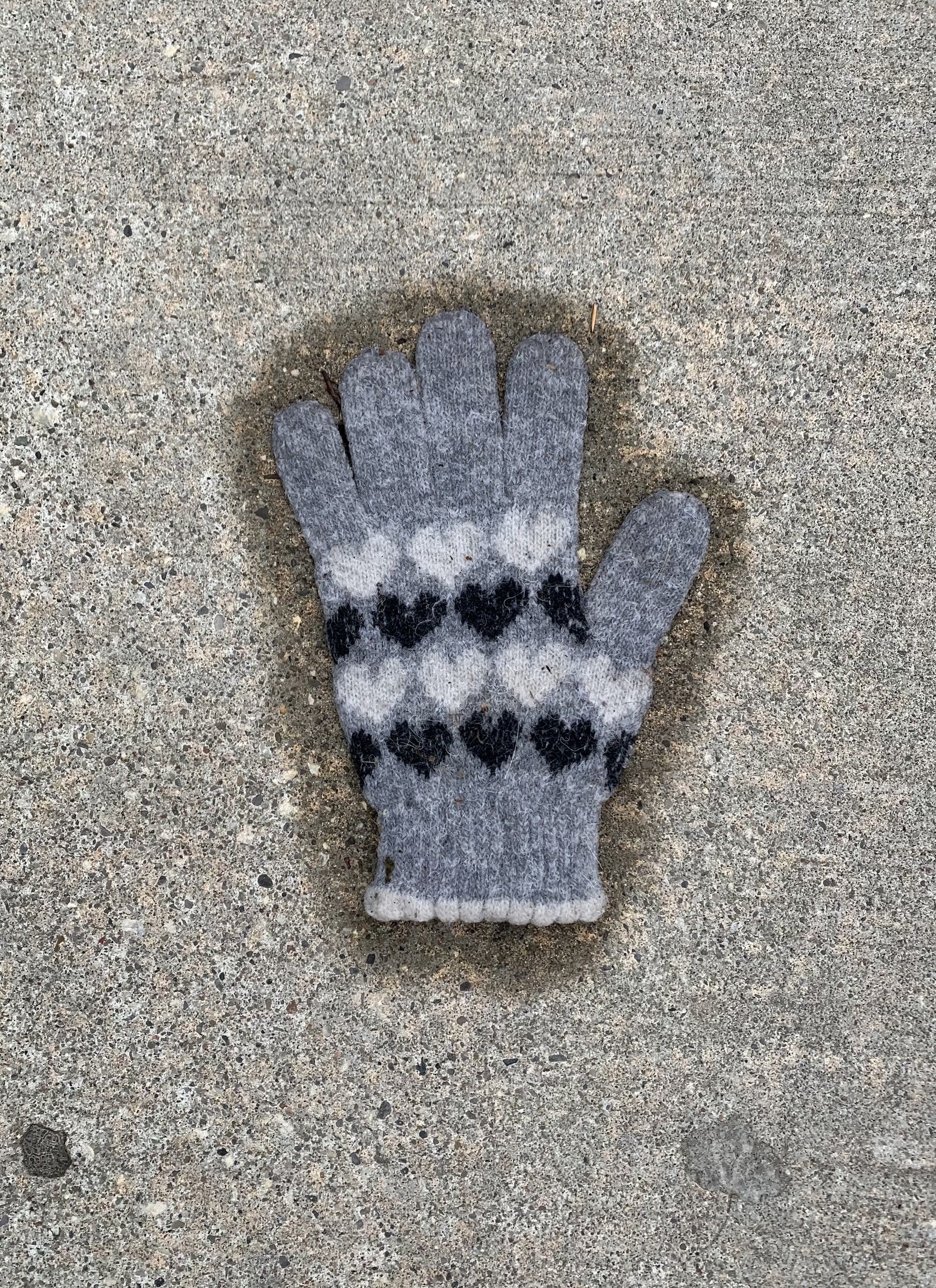
Image by Author
DECORATIVE WOOLEN GLOVES
Glove and love are almost the same word. Are they also sometimes the same thing? In this case, it seems as if they are. Just because the glove has been left on the sidewalk doesn’t mean it can’t express a human emotion. At some point in the past, the owner of this glove chose it and its absent mate because it said “love.” And here it is—thanks to the differential evaporation rates of wool and concrete—spreading love on the sidewalk.
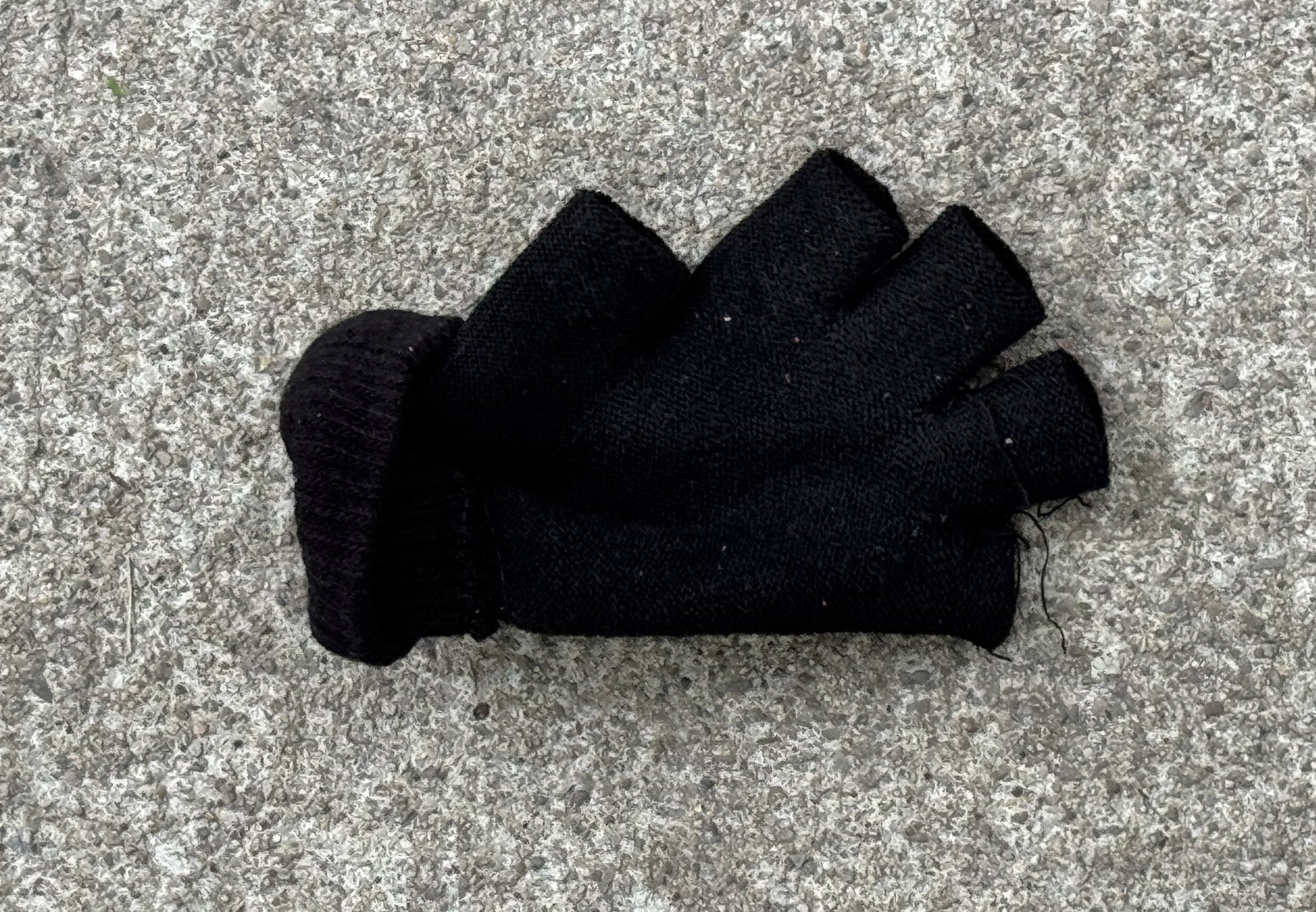
Image by Author
FINGERLESS GLOVES
I never entirely understood the idea of fingerless gloves. When the temperature dips, it’s my fingers that get cold. The palms of my hands are fine.
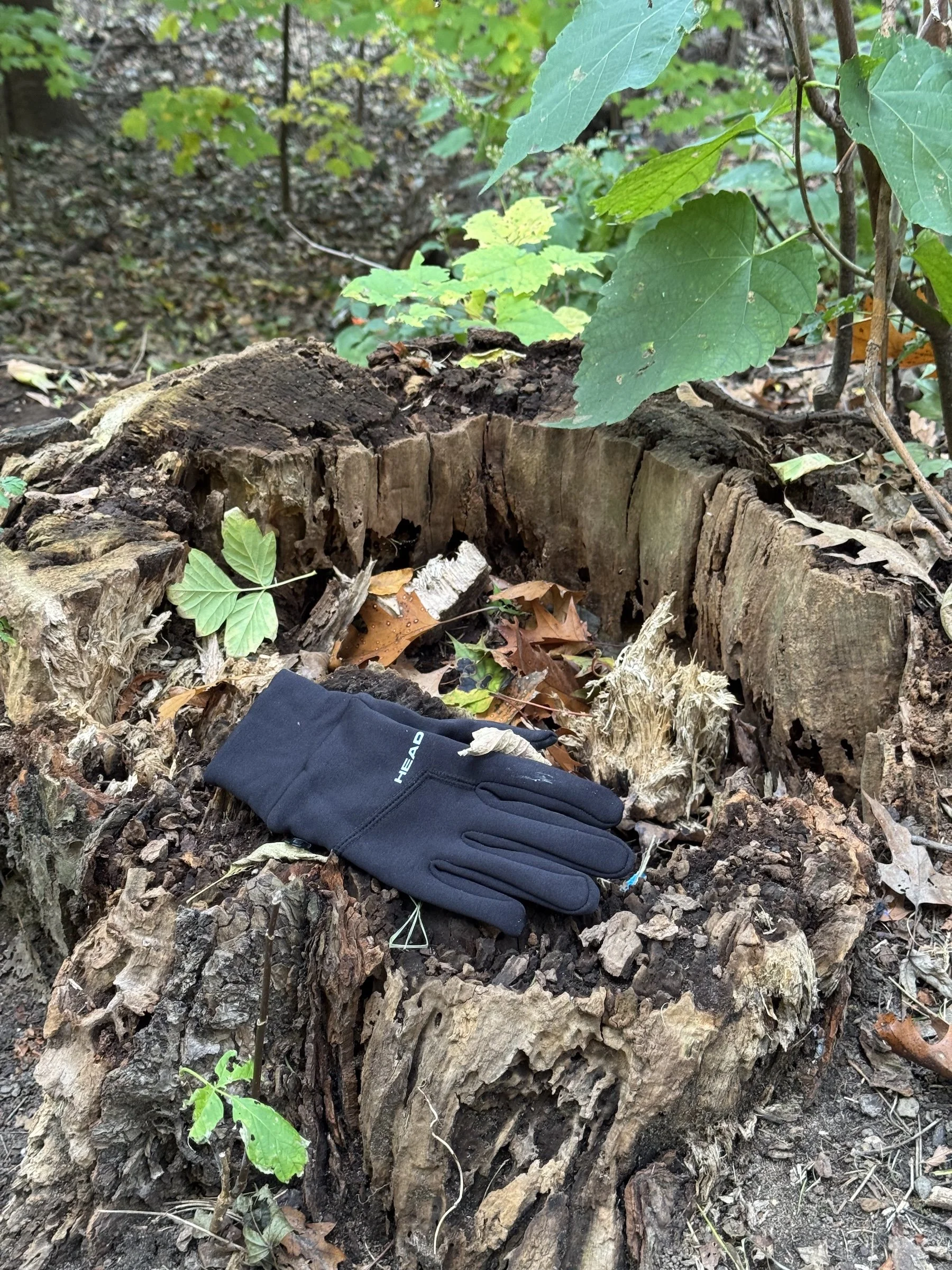
Image by Author
SPORTS GLOVES
Ski gloves, sledding gloves and other cold-weather sports gloves provide excellent thermal insulation, even when there are no snowy hills in sight. Unless you only have one of them. This glove was lost in a park, not next to a snowy hill, but adjacent to an ice-covered, steeply sloped public walkway that the city doesn’t maintain. Does this lonely glove bear witness to some unfortunate slip-and-fall event? We may never know.
Other sporting uses for gloves:
Slapping someone with a glove has a historical and symbolic meaning of issuing a challenge, most famously a formal challenge to a duel or combat. This tradition comes from the medieval practice of “throwing down the gauntlet”. . .
. . . to challenge or dare someone to compete or fight. The idiom originates from the medieval practice where a knight would literally throw down a heavy, armored glove (a gauntlet) as a formal challenge to combat. Accepting the challenge was often done by picking up the glove.
If you’re hungry for more lost glove images, try these websites:
https://www.123rf.com/photo_92244519_lost-glove-on-the-ground-after-snow.html
https://www.facebook.com/Lostgl/
https://www.facebook.com/groups/lostgloves/
https://www.gettyimages.ca/photos/lost-glove
https://www.muleseum.com/lost-gloves
NOTES
1. “Loneliness is on the rise in cities worldwide. In Toronto, 43% of residents report never seeing their neighbors, while 37% feel lonely at least three times a week.” —Toronto Foundation
2. The Russian literary critic Yuly Aykhenvald was an early admirer of Nabokov, citing in particular his ability to imbue objects with life: "he saturates trivial things with life, sense and psychology and gives a mind to objects.”