MORE THAN LEFTOVER
The Space Between Buildings That Makes a City
by Christopher D Moise
I spend an embarrassing amount of my professional life looking at buildings that are not there yet. In my day job as an architect and urban designer for the City of Ottawa, I meet them long before they meet the street: before the dust, before the noise, before the first neighbour’s inevitable question about where the snow will go.
They arrive as tidy packages of certainty: crisp elevations, calibrated shadow studies, landscape plans where every tree looks like it just came off a truck and agreed to thrive. The building is always the protagonist. The street is the supporting cast. And the space between buildings, the seams and joints and leftover slivers, is treated like a technicality. Something to be fenced, drained, lit to code, and then forgotten.
But the city does not live in the protagonist. The city lives in the seams.
This is easiest to remember when you walk Ottawa in the right mood, without a destination that matters too much, and with enough time to let the small decisions of the street reveal themselves. I like mornings when winter is still undecided, when the sun is low and the air feels clean enough to cut. The sidewalks are a choreography of salt and slush, and you can see, in real time, how people negotiate comfort, efficiency, dignity. You can also see what the city has offered them, and what it has refused.
There is a narrow gap I cut through sometimes where the snow melts first, long before the rest of the block gives in. It is not poetic in origin. It is heat leakage and reflected light, the quiet physics of surfaces doing what they do. But the result is a modest winter gift: a ribbon of bare pavement that becomes a shortcut. Nobody filed an application for it. Nobody consulted the public. It simply happens, and people notice, and the city briefly feels less like an obstacle course. That little gap has better attendance than most of our engagement sessions, and it asks almost nothing in return.
We talk about the public realm as if it were a room we can furnish. Add benches, add trees, add a decorative paving pattern, and call it complete. But Ottawa’s real public realm is often the parts we do not name with confidence. The service corridors behind restaurants. The side yards that become narrow passages. The corners where two buildings fail to meet cleanly and leave a pocket of space that catches sun, or blocks wind, or gives you just enough shelter to pause. These are not the postcard Ottawa spaces. They are the everyday Ottawa spaces. They are where the city is honest about having a metabolism.
If you want proof, stand at street level and watch. Watch how the Market works when it is busy and loud and a little chaotic. People spill out of doorways, bunch at corners, break into small constellations, then dissolve and re-form. The space between buildings becomes a pressure valve. Someone steps two metres off the main flow to re-tie a bootlace. Someone takes a phone call where the noise softens. Someone stops with a coffee not because they planned to linger, but because the space quietly permits it. In those moments the city is not being consumed. It is being lived.
Ottawa, for all its virtues, has a peculiar talent for treating these in-between spaces with something like shameful disregard. We do ceremonial spaces beautifully. We can do capital-G gestures. We can do the Canal, the grand promenades, the big moves. But we struggle with the little moves, the small permissions. We often design the in-between as if we do not trust the public. A narrow side yard becomes a hostile corridor. A setback becomes decorative mulch. A mid-block condition becomes a place you hurry through, eyes forward, because it feels like it belongs to nobody and therefore belongs to risk.
The tragedy is that these spaces are not neutral. They are charged with consequence. They shape microclimates. They decide where wind accelerates and where it settles. They determine where snow gets stored, or dumped, or turned into an icy wall that pushes people into the roadway. They decide whether a street is comfortable in August and survivable in February. They influence where water goes during a downpour and where it pools during freeze-thaw. They set the terms of privacy and overlook. They decide whether you can walk with your shoulders relaxed or whether you instinctively tighten up because the space is telling you, without words, to keep moving.
And they also do something else that rarely makes it into our drawings. They create a non-monetized layer of the city.
Not everyone can afford a patio. Not everyone wants to be on display in the busiest part of the street. Not everyone can buy comfort. But anyone can stand in a pocket of shelter where two buildings block the wind. Anyone can pause in a sliver of shade on a July afternoon. Anyone can sit on a low wall that was never labelled as seating and still be part of the city for ten minutes without paying admission. The in-between spaces are where equity quietly sneaks into the urban fabric, not as a program, but as permission.
I think about this whenever I review projects that meet the lot lines with the confidence of a clenched jaw. Maximum envelope. Minimum setback. Ground floors that perform “animation” like a contractual obligation, not a genuine offering. Somewhere, inevitably, a thin strip appears on the plan. Two metres here. A recess there. It gets labelled “landscaping,” as if that word automatically produces comfort, softness, resilience. Sometimes it does. Sometimes it is a living edge that cools the air, soaks up water, protects soil volume, gives a street tree a fighting chance, and gives pedestrians a moment of relief. Other times it is decorative mulch and a handful of shrubs that will be dead by July and then quietly removed the following year.
The difference is rarely budget. The difference is belief. Do we believe the in-between is worth designing.
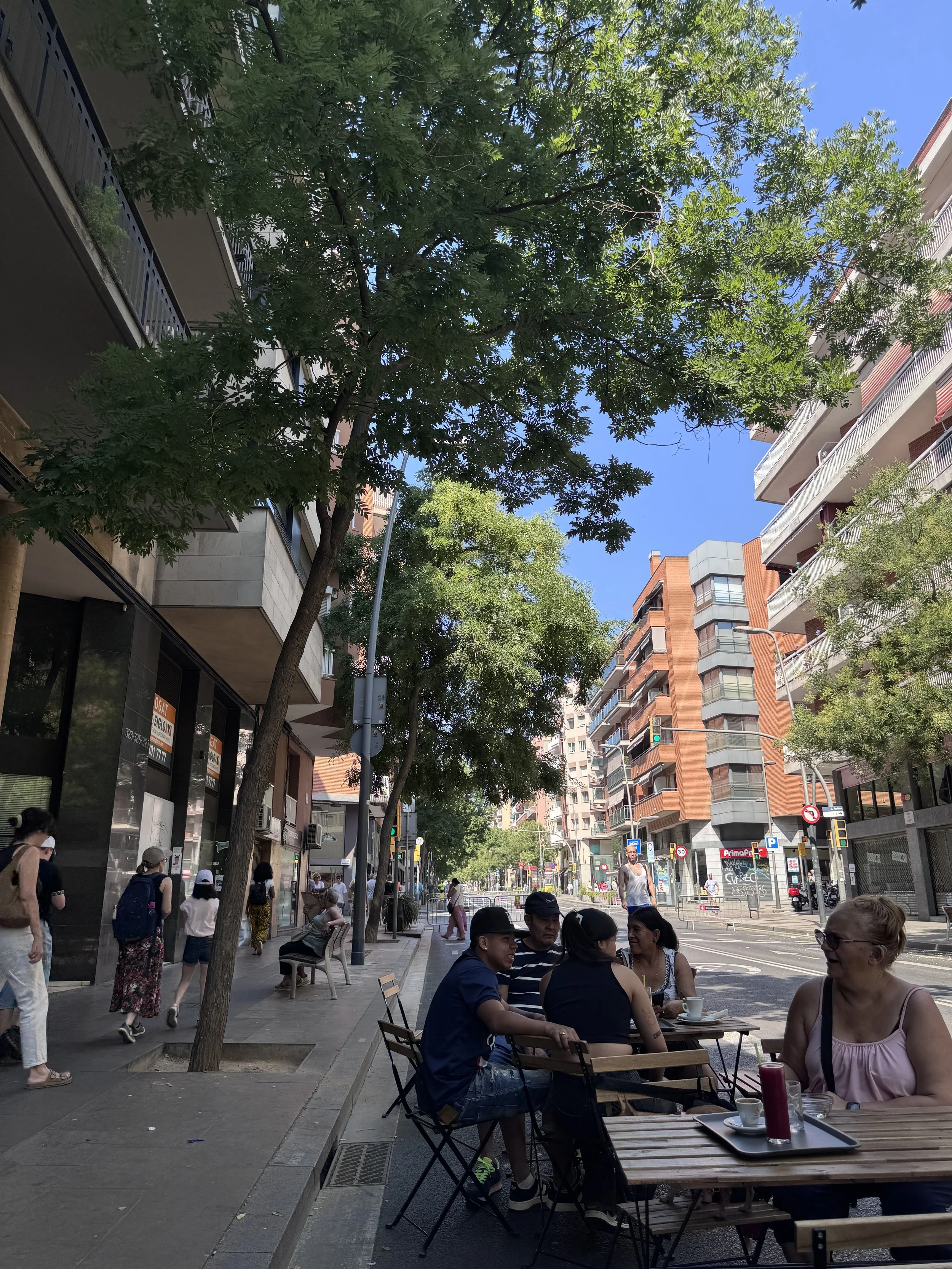
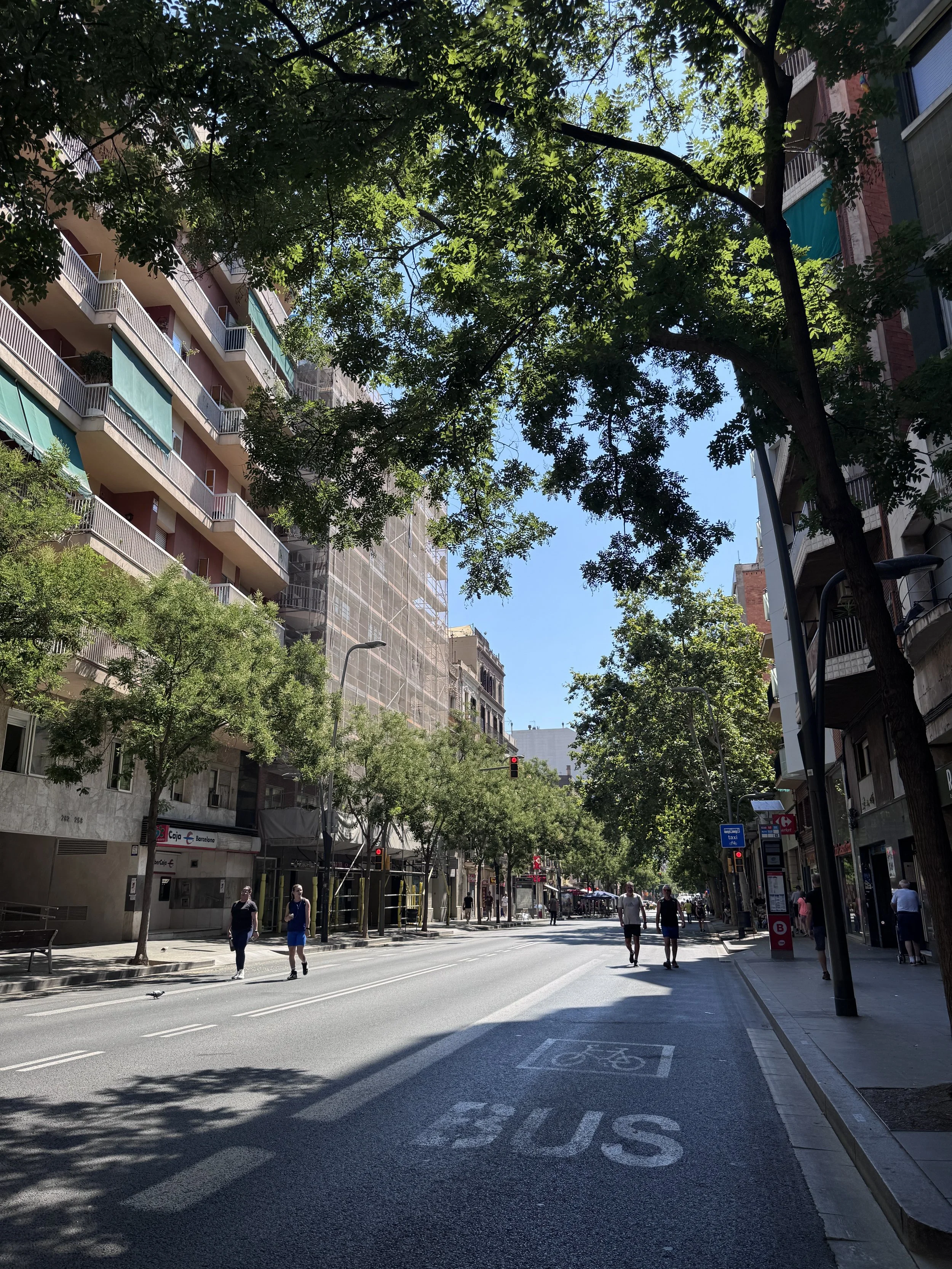
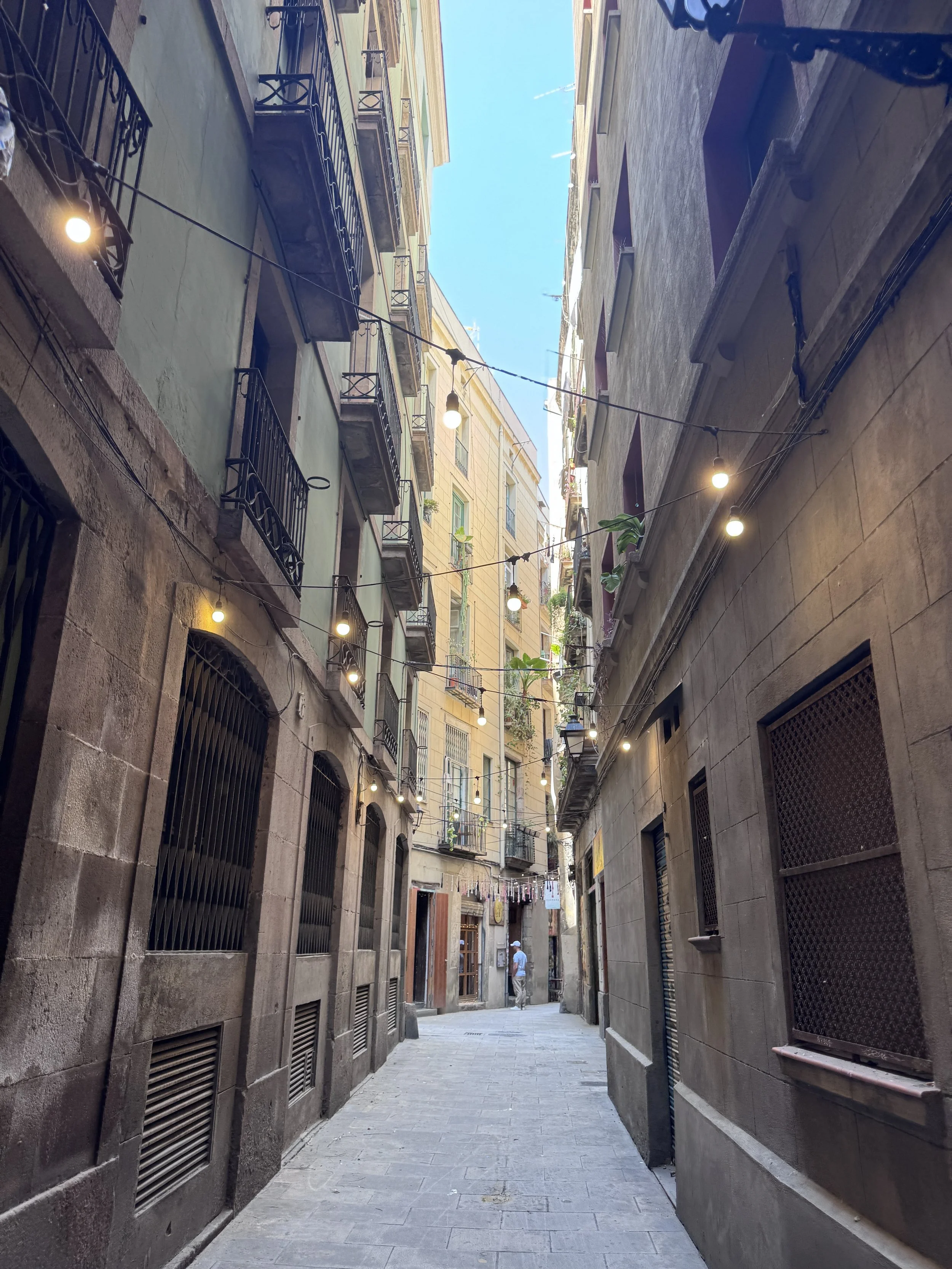
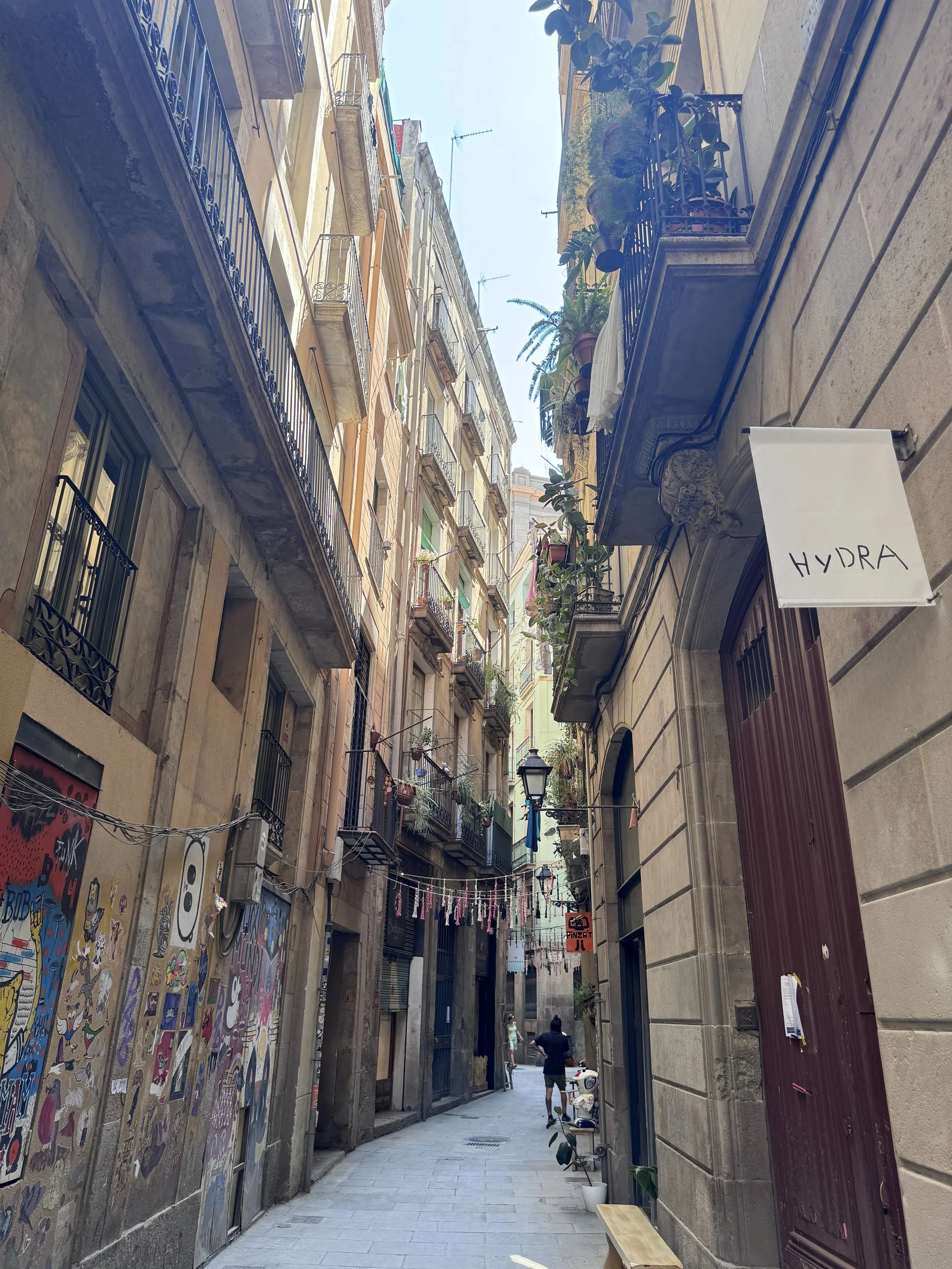
This summer, I visited several European cities, and I was reminded what it looks like when a city has been believing in in-between space for centuries.
Images by Author
I walked through places where the “space between” is not a leftover at all, but the primary unit of urban life. In Barcelona, the buildings hold the street like a careful hand. The blocks are confident, but the experience is intimate because the edges are deliberate. You feel it on Avinguda Gaudi, where movement thickens and thins, and you feel it again in the Eixample, where the corners open just enough to let light in and make crossing feel natural instead of negotiated. Shade is not an afterthought. The street is not just an access route. It is a room, and the walls of that room are continuous enough to feel safe and legible but varied enough to stay interesting. You can feel that the city expects people to walk, pause, detour, and return, and it has shaped its in-between spaces to make those choices easy.
In France, medieval form still teaches lessons without needing to announce itself. The narrow passages between stone walls in Carcassonne are not simply picturesque. They manage heat. They hold cool air. They compress and release movement like a good piece of music. Your body understands what is happening before your brain narrates it. The streets tighten, your pace slows, your attention sharpens. Then you turn a corner and spill into a small square that feels inevitable, like it has always been waiting for you: a few cafe tables tucked under an arcade, a worn fountain or a trough of water, shutters half-open above, the whole space scaled to a conversation instead of a vehicle. It is hard not to think about how many centuries of everyday life have tuned those proportions, six or eight at least, probably more, depending on where you start counting.
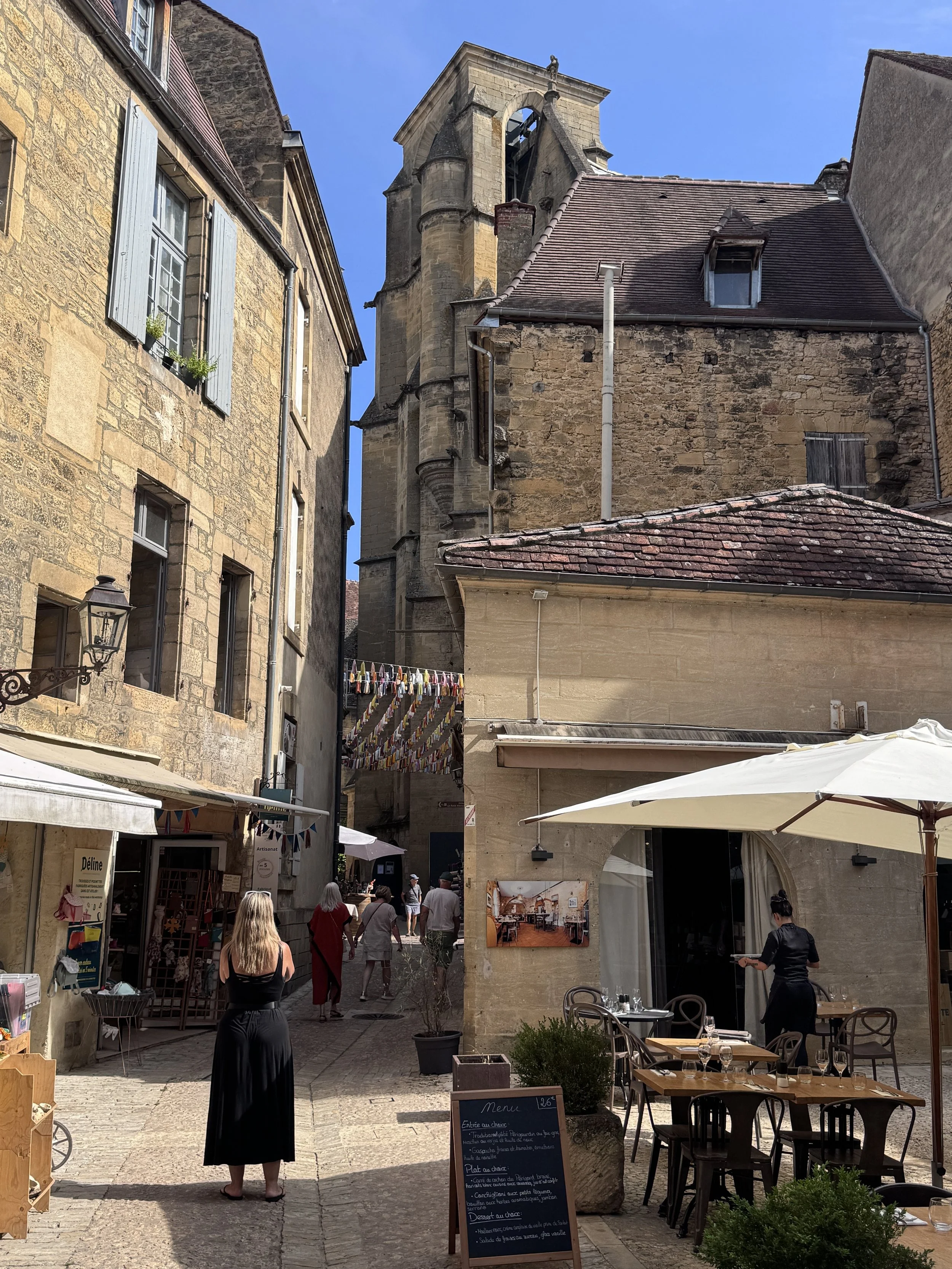
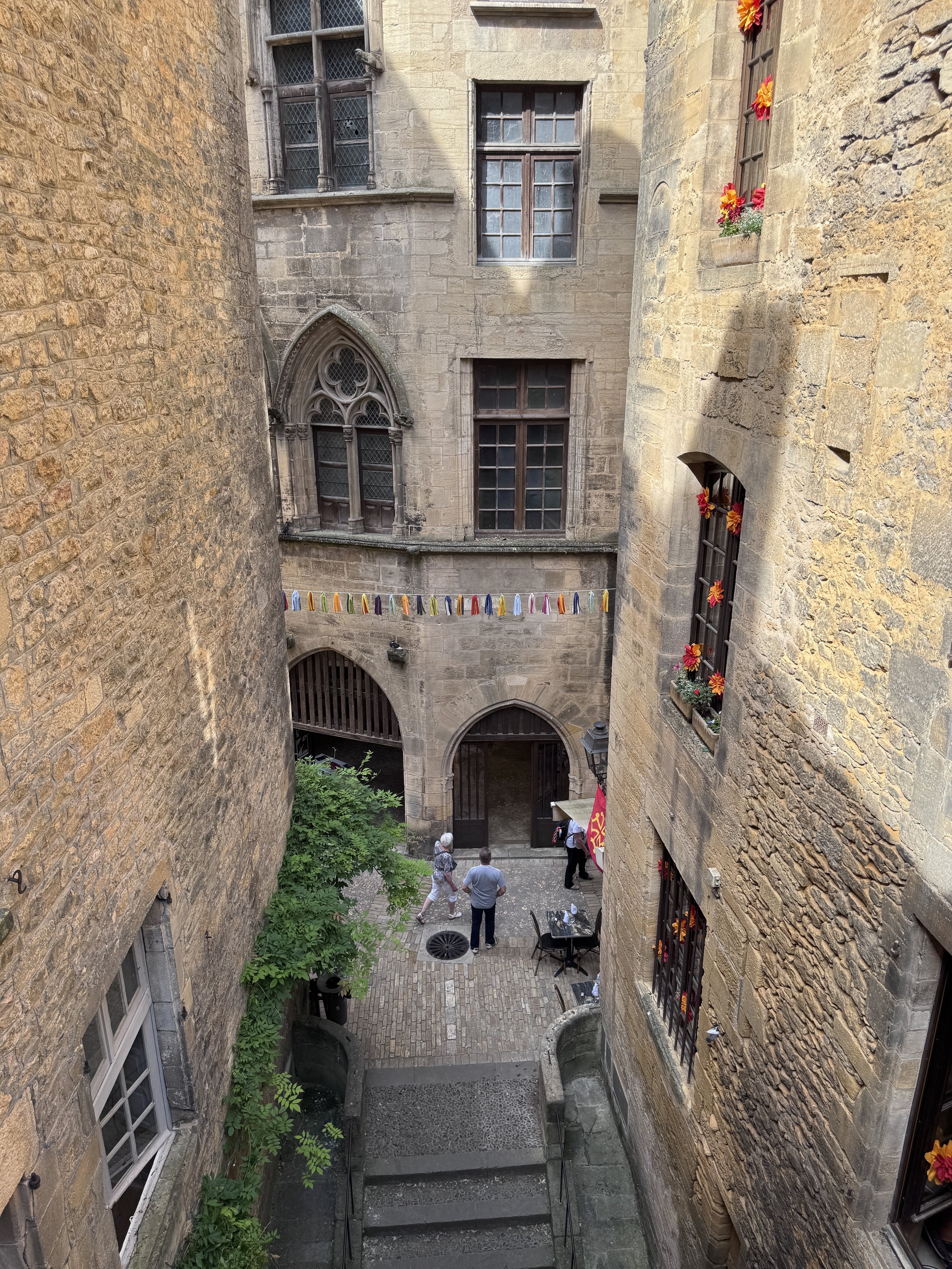
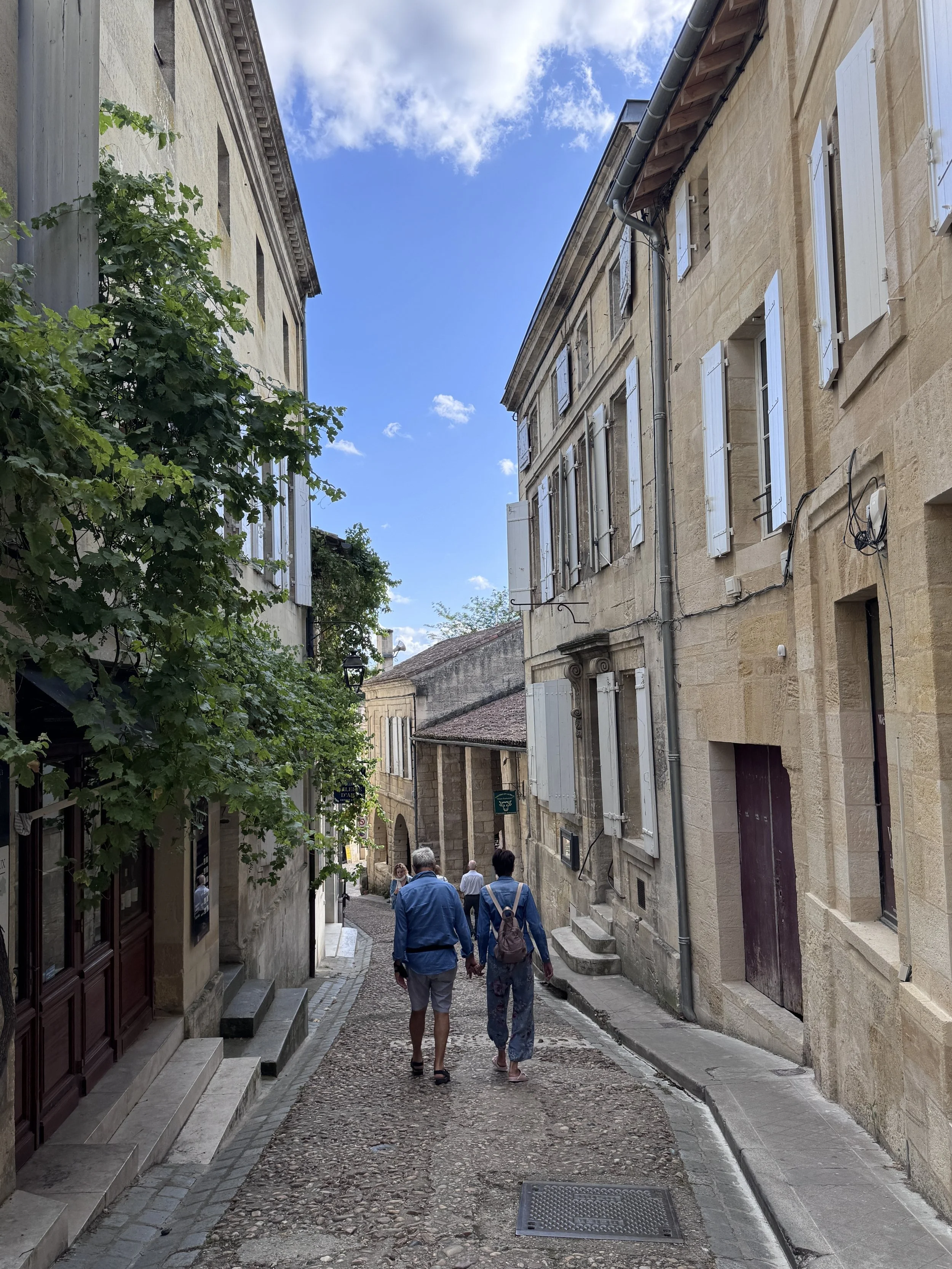
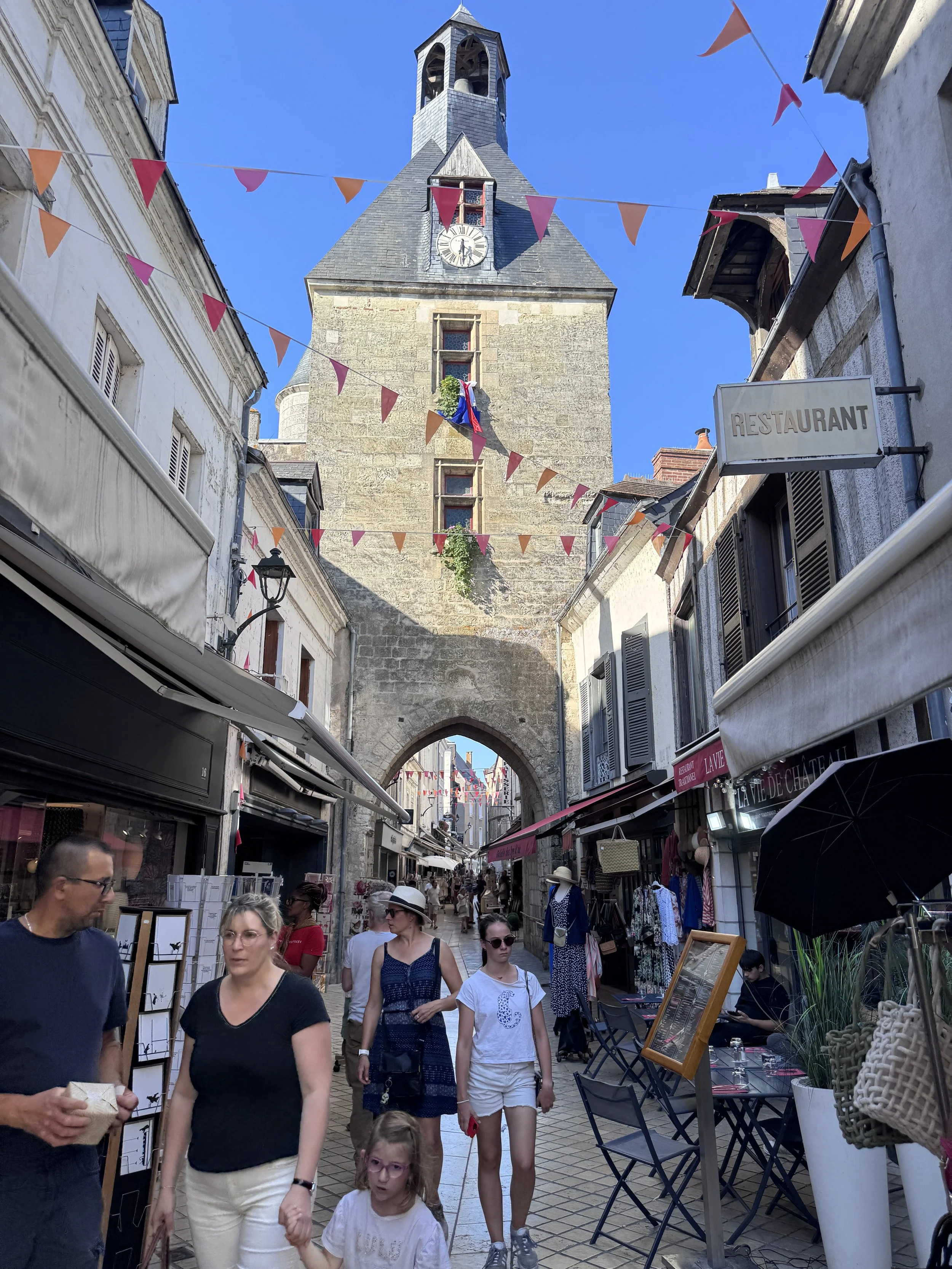
Images by Author
Sarlat-la-Canéda, in France’s Dordogne region, made the point even more clearly. It is the kind of place you reach on purpose, far from big-city gravity, and the reward is a medieval centre that is remarkably intact and largely pedestrian in feel. The town is a masterclass in edges and thresholds. Doorways, arcades, steps, ledges, tiny recesses in walls, all working together to create a gradient between private and public. The in-between is layered. You are rarely forced into a binary choice of inside or outside, public or private, exposed or hidden. Instead, you move through a series of small permissions. A bench that belongs to the building but is used by the street. A shaded alcove that makes space for conversation. A narrow lane that feels like a corridor but behaves like a social room because of how it is proportioned and textured.
What Europe does exceptionally well, especially in these older places, is treat the in-between as structure, not decoration. The “space between” is not just the residue of parcel lines and building envelopes. It is intentionally shaped. It is scaled for bodies. It is made from materials that age well and invite touch. It offers microclimates as a feature. Shade, shelter, coolness, breeze, the occasional dramatic sun patch, all of it feels curated by the massing itself, not bolted on later.
There is another lesson hiding in plain sight, and it is the one Ottawa tends to resist. European medieval patterns are comfortable with irregularity. They accept that a street can bend, pinch, widen, and still be coherent. They accept that a lane can be narrow and still be safe because there are eyes on it, doors on it, life on it. They accept that not every surface needs to perform the same way all the time. Some places are for moving through, some for lingering, some for retreating, and the transitions between those modes are spatial, not dictated by traffic lights, warning signs, and paint.
Ottawa often tries to solve this with policy language and standards, and then wonders why the result still feels heavy-handed, or incomplete, or both. We widen a sidewalk but forget to shape the edge. We add a plaza but forget to make it comfortable at noon, at dusk, in February, and in shoulder season rain. We design for events instead of designing for Tuesday. We are good at providing space. We are less consistent at giving that space the right proportions, the right enclosure, the right invitations.
Ottawa could learn from Europe without pretending we are medieval, and without copying forms that do not belong here. The lesson is not stone walls or old-world charm. The lesson is spatial discipline at the small scale.
We can shape the in-between with the same seriousness we give the building. We can design for climate as a daily experience, not as an abstract metric. We can make streets feel like rooms again by prioritizing enclosure, continuity, and thresholds that welcome rather than repel. We can treat corners as social infrastructure, not just geometry. We can stop confusing emptiness for openness and start understanding that comfort often comes from defined edges, not from leftover breadth.
A well-designed seam is an offer. It gives you choices: sun or shade, noise or quiet, speed or pause. It lets you be present without demanding that you perform, purchase, or keep moving. A poorly designed seam is a refusal. It is a wind tunnel. It is a dead zone. It is a corridor where lighting is just enough to meet a standard but not enough to feel safe. It is a place where fences and blank walls communicate suspicion. It is a leftover that has been turned into a warning.
Ottawa does not need to invent a new public realm to fix this. We already have the raw material: the Market service lanes, the side-yard slips in Hintonburg, the mid-block cuts that quietly stitch Centretown together, the underused edges along Bank and Somerset where the wind still wins too often. Right now, too many of these spaces do little more than carry bins, vents, and runoff. With care, they can carry people. They can hold trees. They can manage water. They can offer comfort.
The most hopeful part is that the moves are often small. A slightly wider passage that invites walking instead of warning you away. A ground floor that opens onto a side condition, not just the main frontage. A setback treated as soil volume and shade, not decoration. A wall softened with planting, lighting, or simple transparency. A corner shaped to hold a pause. A service space designed with dignity, because service is city life.
If you want to know whether Ottawa is getting this right, do not start with the skyline. Start with the walk—through the Market, along Bank, across the shortcuts that people have already voted for with their feet. Watch where they cut through, where they stop, where they steer clear. That is the city speaking plainly. Those seams are not empty. They are everyday infrastructure.
So here is the call, and it is a simple one: The next time we draw a building, or review one, or approve one, we should ask a question that is just as important as height or setbacks or materials. What are we offering in the space between buildings, and who is intended to use it?
If we start asking that consistently, Ottawa’s forgotten spaces will stop being forgotten. They will become a network of small comforts and small freedoms, stitched together by care. A city built from intention, not from leftover breath.