One Valley: Two Geometries
By Rocco Maragna, FRAIC
Introduction
An architectural journey is often traced as a sequence of projects, cities, and commissions; in truth, it is a condition—a way of moving through time and space while carrying memory, displacement, and intent.
In my work, I have sought to hold the tangible and intangible within a single frame: geometry and passion, solids and voids, structure and breath, light and shadow, presence and absence. I have never relied on formulas or fixed systems; each line, void, and column must carry meaning beyond its material existence.
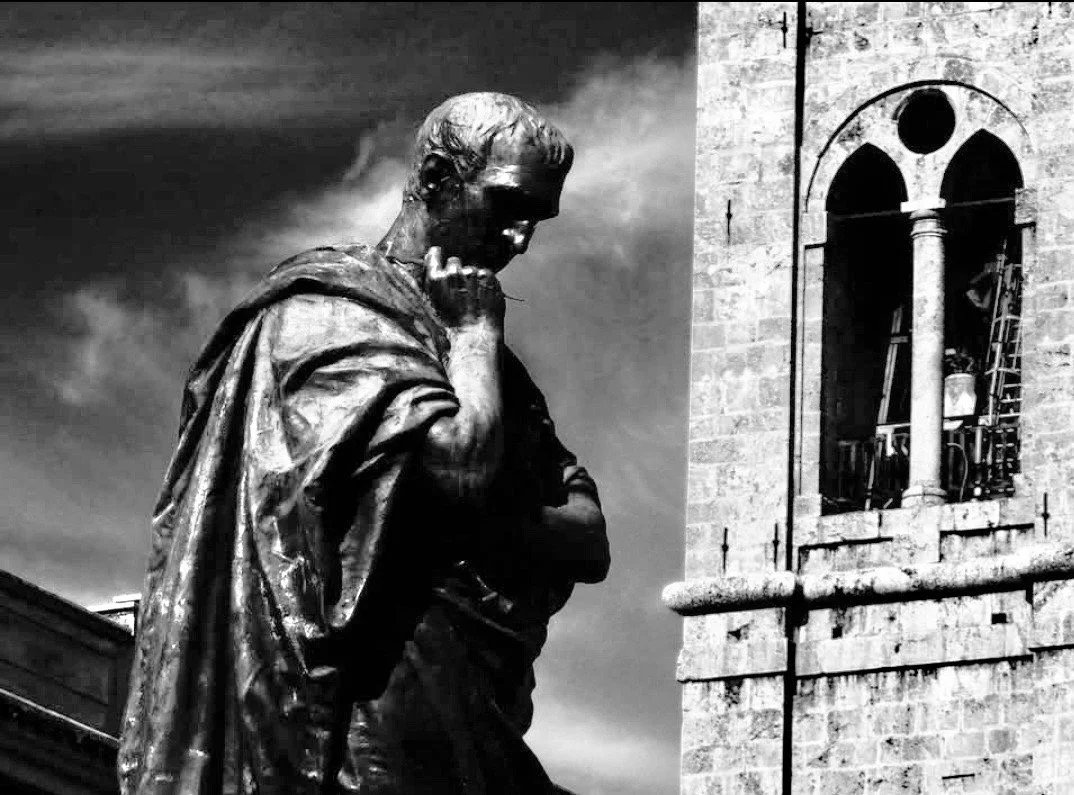
Aware of past greats, yet a disciple of none. Within this quiet duality, I found myself one day in Constanța, on the Black Sea, years before its waters would again be unsettled by more recent events. in Crimea.
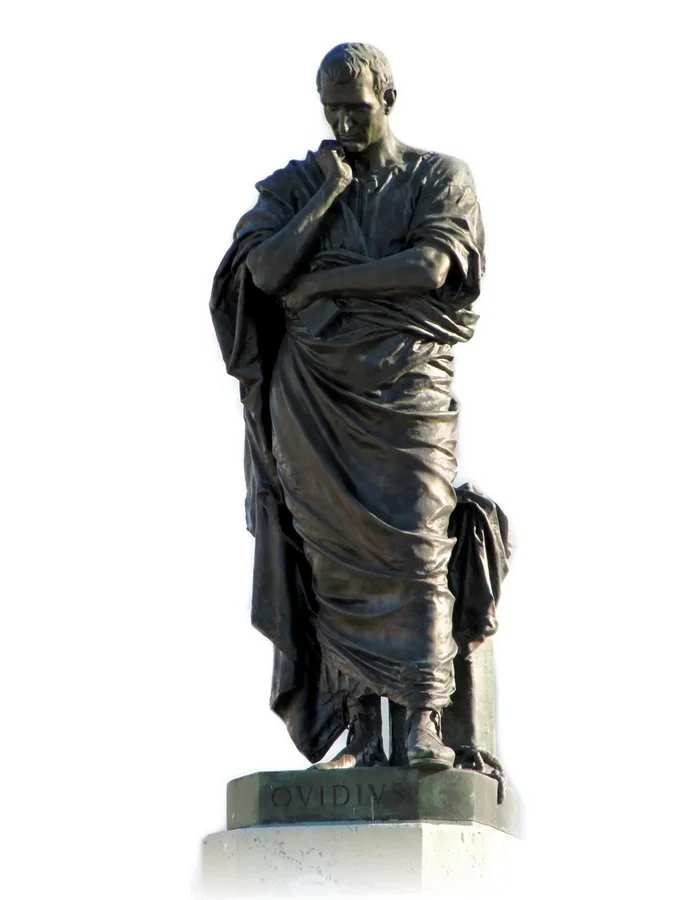
The civic square lay in early light, the air marked by a faint trace of salt. Stone held the night’s cold; surrounding façades loosely defined the edges of the piazza. At its centre stood a bronze figure, elevated yet fixed, anchored to a point that could not be abandoned. On its plinth, an inscription read:
HIC EGO QVI IACEO TENERORVM LVSOR AMORVM
INGENIO PERII NASO POETA MEO
AT TIBI QVI TRANSIS NE SIT GRAVE QVISQVIS AMASTI
DICERE NASONIS MOLLITER OSSA CVCENT,"
(I, Ovid, the poet who toyed with tender love,
lie here, betrayed by my own genius.
You who pass by, if ever you have loved,
be it not too hard to say: May the bones of Ovid rest softly.)
The text functioned as a terminal condition—an architectural endpoint. It reduced a life to a final coordinate: here lies. No origin, no extension, no return—only bounded presence defined by absence. Yet another set of lines emerged, not on stone but in the mind: Sulmo mihi patria est—Sulmo is my homeland—and Pelignae dicar gloria gentis ego—I shall be called the glory of the people of Peligna.” Two coordinates endured across time: Sulmo and Peligna. It was Peligna that held me—the valley, not merely as geography but as recognition. In that instant, something stirred: he and I shared a common origin—the Peligna Valley in Abruzzo.
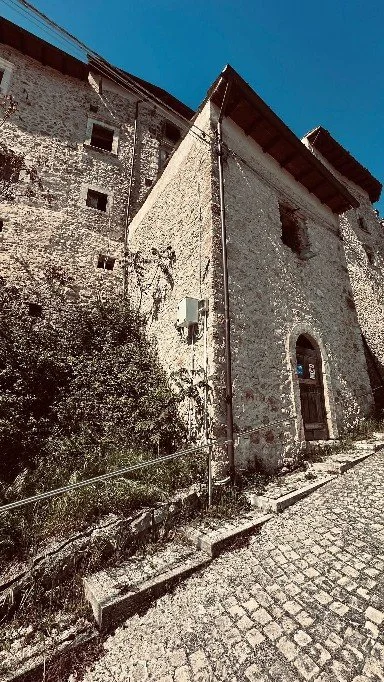
The figure cast in bronze, Publius Ovidius Naso, was born in Sulmo; I in Vittorito—a mere ten kilometres apart, yet separated by two millennia. Two lives, one valley, the same mountains, the same quiet knowledge that the world shapes us before a verse is written or a line is drawn.
This kinship led me to explore the fragments of his life as one might study an architectural work: measuring what is known, sketching what remains unseen, assembling meaning from absence. In that process, the boundary between observer and observed began to dissolve. Ovid became both medium and structure. In tracing his exile, I traced my own migration.
He was an architect of words and transformation. I became an architect through displacement. In this, our trajectories began to align.
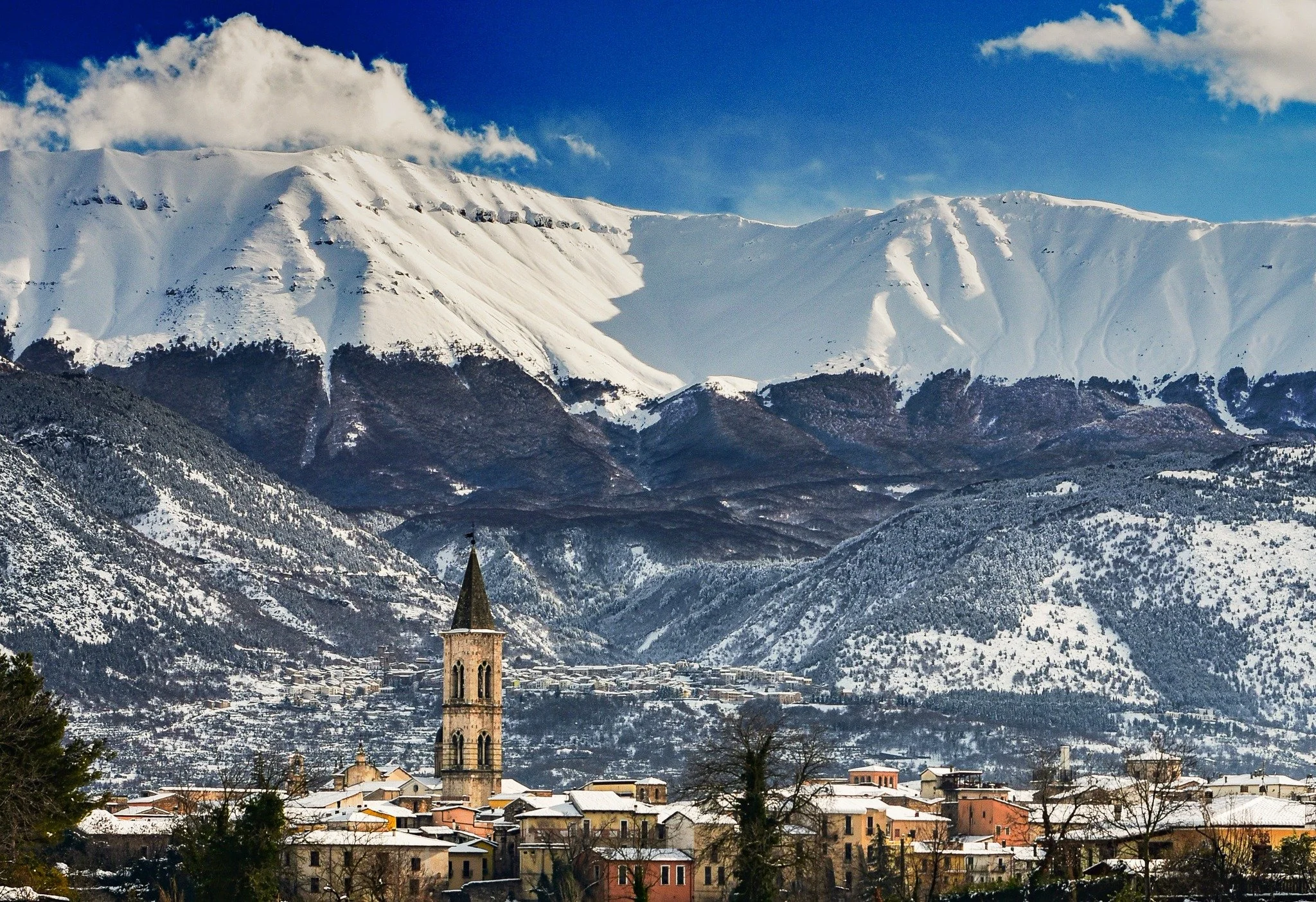
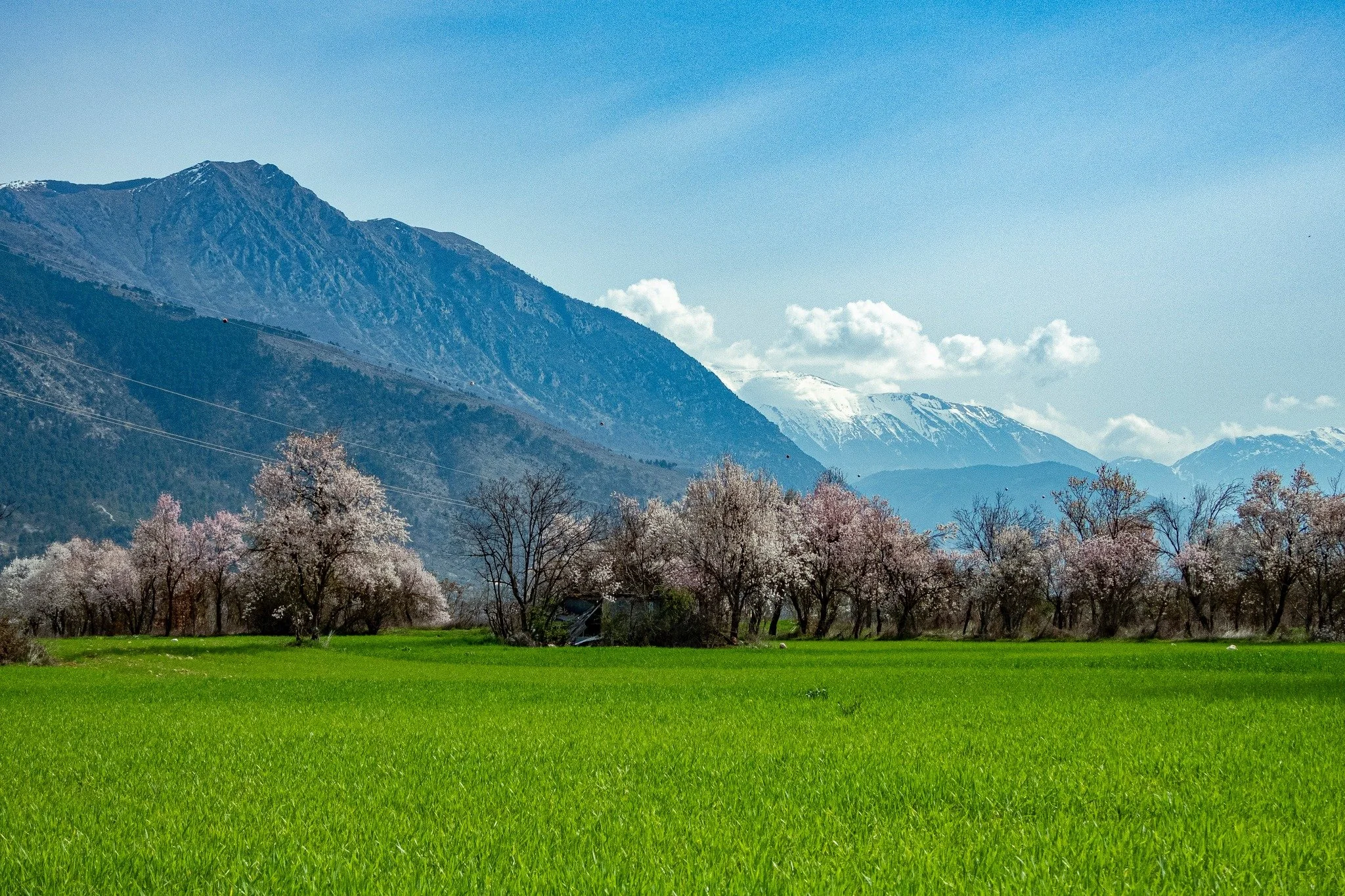
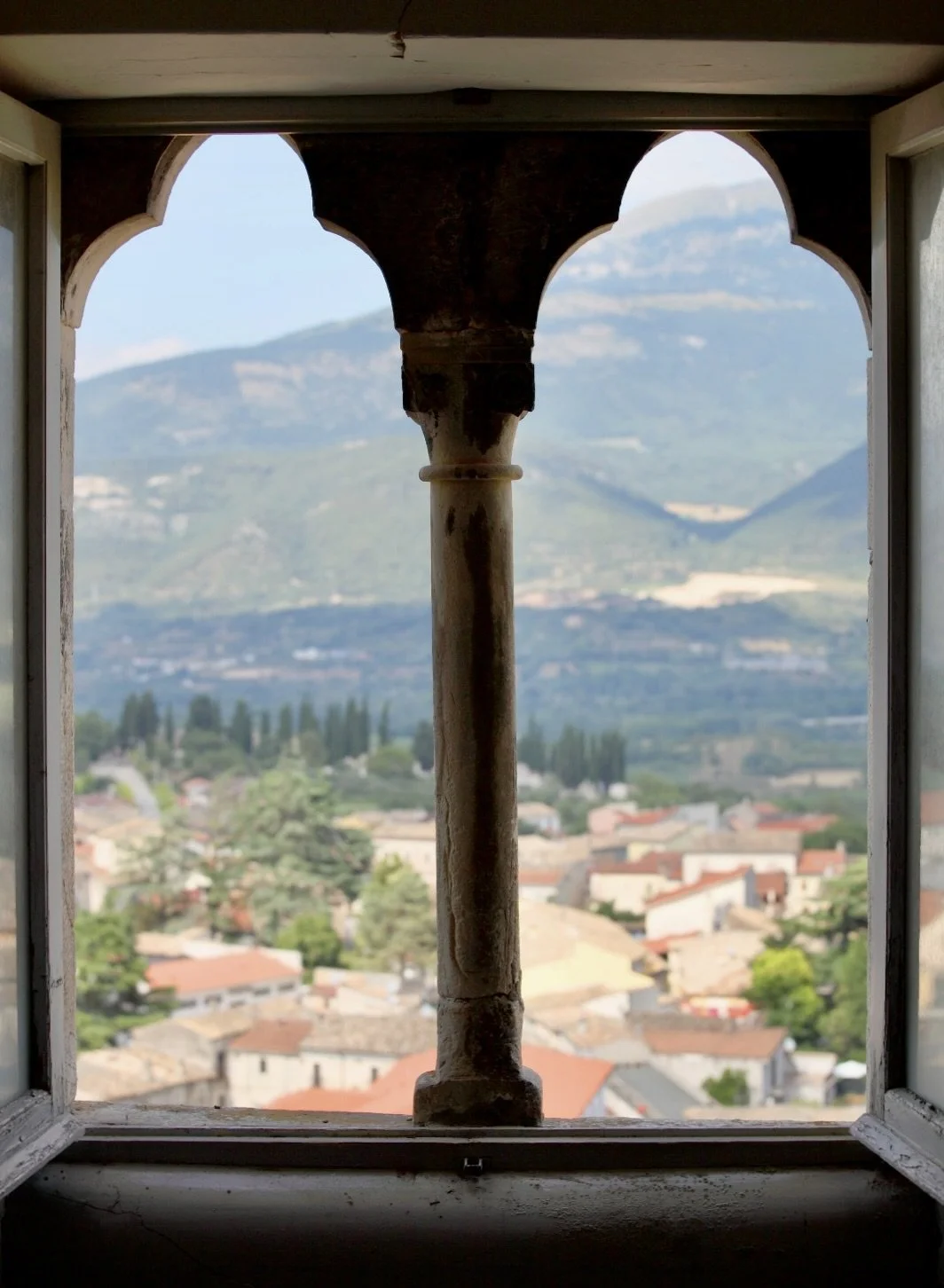
The ‘Peligna’ Valley
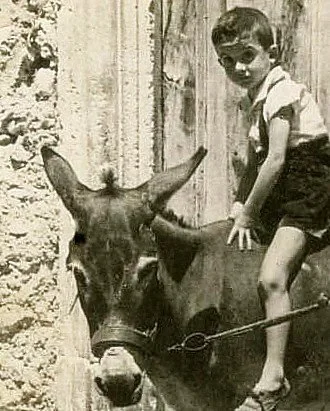
In the valley, two lives take root. Ovid’s cradle stood within a domus among open meadows; mine in a modest room above a stable, where Pallino, the donkey, laboured daily. Both equestrian, though of very different pedigree. He grew within the expanding orbit of Roman power; I within a village of stone, a fragment of a nation seeking renewal. He inherited privilege drawn toward Rome; I, the calloused inheritance of peasantry. Yet the same light marked our beginnings, the same wind crossed the fields, the same mountains inscribed permanence into our eyes.
Beginnings: Two Seeds in the Same Soil
Ovid’s early years unfolded among hills and rivers. He ran through meadows with his filly, Aura, absorbing stories that carried lessons of courage and wit. My own youth in Vittorito was shaped by different textures: dust, manure, and the cadence of stories exchanged across thresholds. My destiny at birth was not departure, but labour within the valley, alongside patient Pallino. Though our conditions diverged, the valley taught us both to look beyond the encircling mountains, while never forgetting their quiet authority.
Early Formative Years
Ovid left Sulmo in his teens for Rome, where rhetoric and discipline shaped him. I left Vittorito as a pre-teen, bound for a new world. His path led toward the centre of empire; mine toward a society still forming itself through migration. He entered a world of Caesars and poets; I, one of labourers and street vendors.
He acquired the refined Latin of salons; I, the hesitant English of a stutterer, shaped as much by silence as by speech. Yet in both cases, the earlier tongue endured. His language carried the valley into Rome; mine preserved Italian and dialect beneath the surface of English.
Exile as Migration – Migration as Exile
As an adult, Ovid was exiled by decree of a filius dei, his life dividing at Tomis in 8 CE under
Augustus—a rupture that redefined all that followed. I, by contrast, was set in motion by the authority of the pater familias. Here lies our shared condition—not in rank, but in origin.
Yet exile, in his case, was not distance alone but dislocation. Rome endured in language and memory while receding as lived reality, leaving him suspended at a threshold—neither inside nor outside. My migration, though not punitive, carried a similar rupture: from the margins of a known world into an unknown one, where language fractured, continuity broke, and the self was compelled to reassemble.
Exile and migration converge—not as equivalents, but as conditions that reshape perception. Both unfold within an interval, a space neither anchored nor unmoored. Here architecture reveals its deeper role: not simply the making of form, but the ordering of experience after rupture—holding memory, absence, and presence in fragile balance.
Yet a divergence remains. Ovid’s exile continued to orbit Rome; his writing is structured by return. Distance is measured by attachment. My trajectory unfolded differently. Origin did not vanish, but gradually released its authority. What emerged was not return, but continuation—a condition I call aponostia: not the pull of return, but freedom from its necessity.
Language as Expression
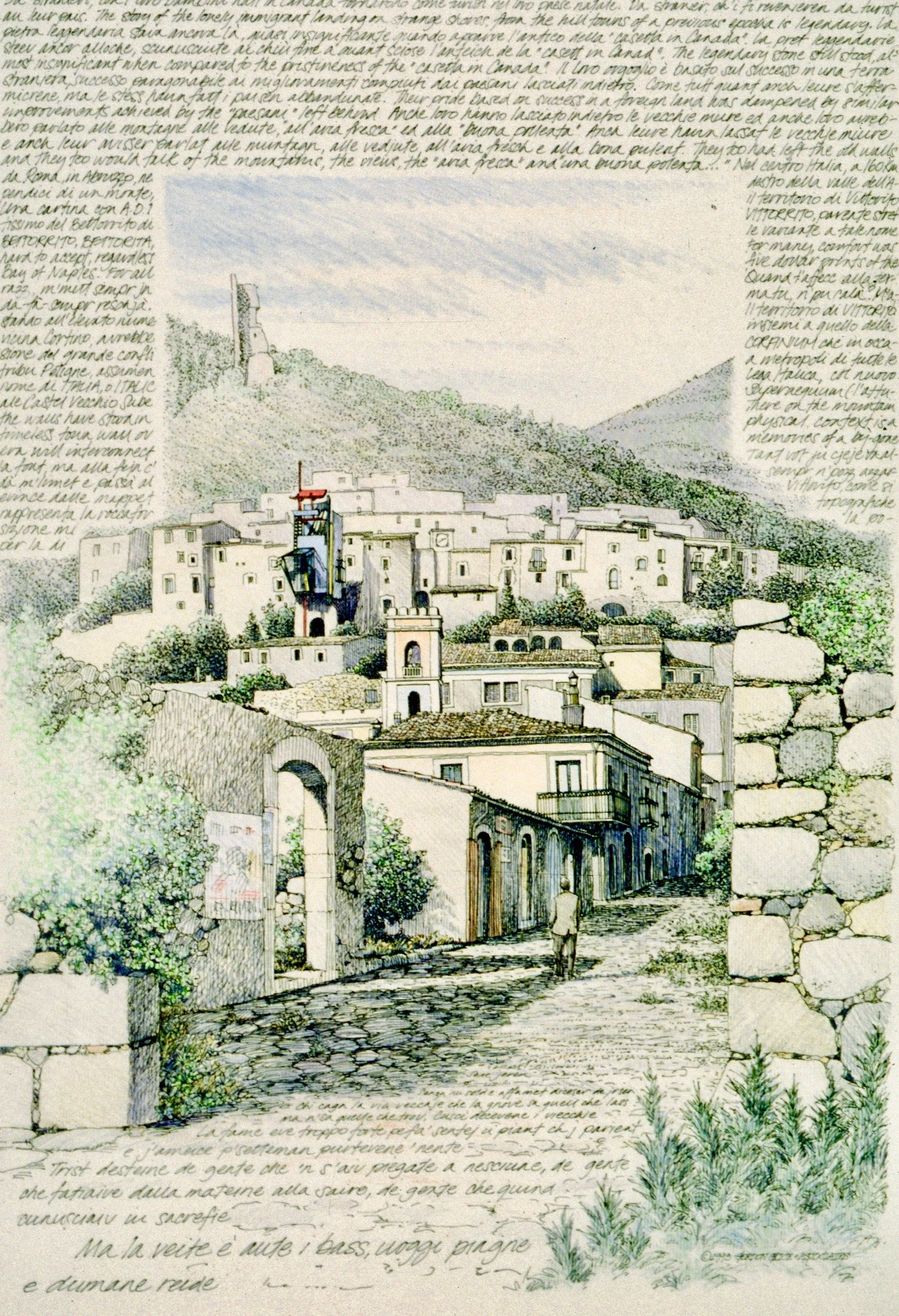
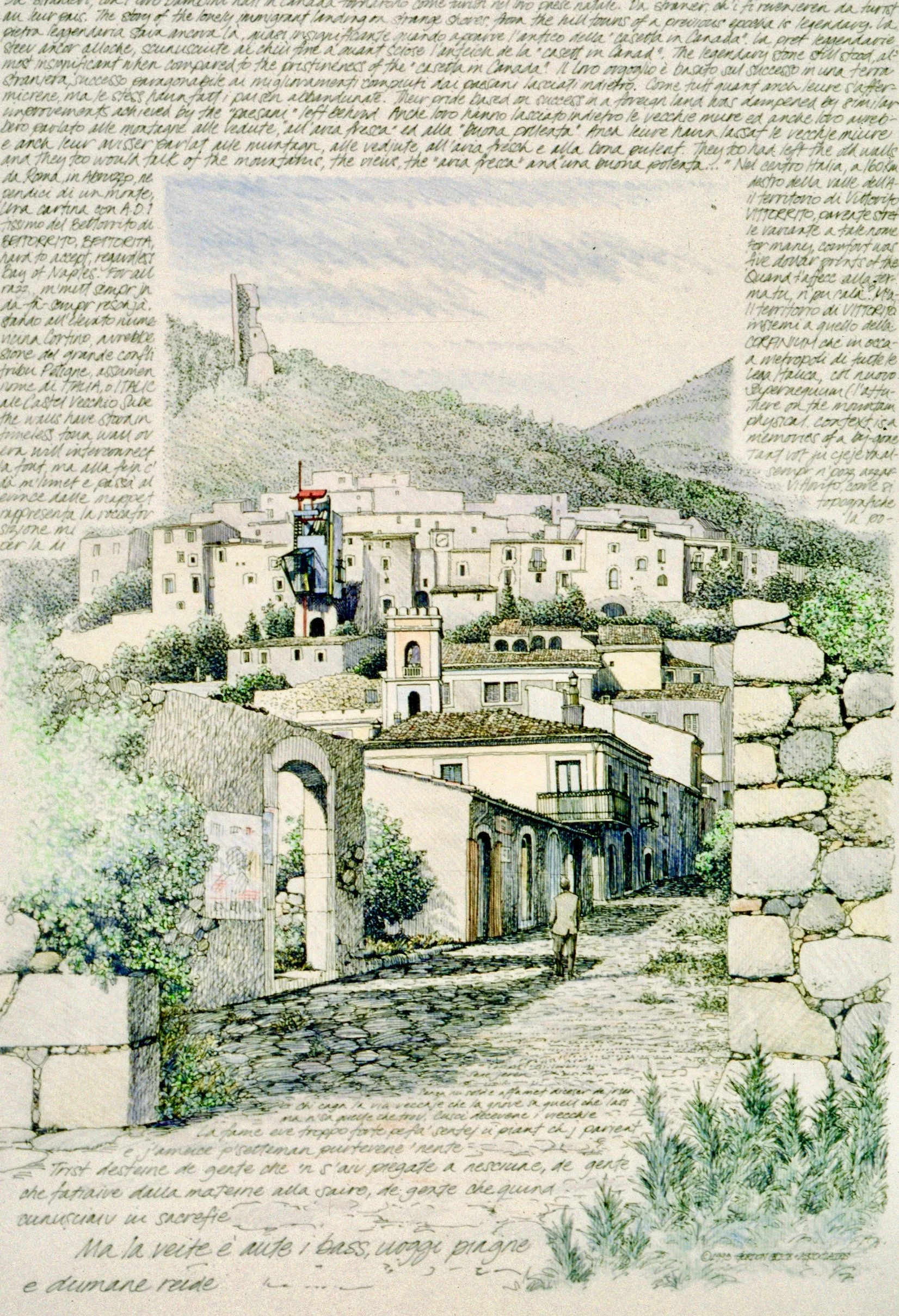
Mnemotec Shelter. A proposal.
Illustration: Gordon Grice + Associates, 1998
For Ovid, survival became poetry. In Tristia and Epistulae ex Ponto, he writes from the edge of empire, yet always toward Rome. Presence recedes; memory governs. My own work unfolded through architecture—through drawing and constructing spaces for lives in unfamiliar contexts. I carried the village with me: its proportions, silences, and restraint. Yet it did not remain a centre to which form returned. It became substratum—embedded, not directive.
Architecture, then, did not reconstruct what was left behind. Memory informed but did not prescribe. Each project became an encounter, not a recollection. Here lies the essential
distinction: ‘In exile, language turns toward what is lost. In migration, form turns toward what is emerging.’
Culmination: Metamorphosis
I have imagined that Ovid’s story did not end in Tomis. His transformation continued—not only physically, but in thought and being. Displacement reshaped him, pressing identity into new forms, though never fully releasing him from origin.
In this, I glimpse my own path. Migration, like exile, is a continuous transformation—a folding of past into present, of origin into horizon.
The Unfinished Page
Ovid’s ending remains unresolved, as though he continues to move among us. His journey—from Rome to the edges of empire—was never fully inscribed. Exile is not removal but reconfiguration: attachment redrawn, not erased. Life expands across geographies even as it thins in immediacy. To inhabit this condition is to dwell within a threshold, neither fully here nor there, where home disperses across memory and time.
My own ending remains unwritten. Yet there is clarity in recognizing that migration, architecture, and identity are not separate domains, but interdependent structures of the same condition. The work resides not only in buildings, but in the intervals between them—the crossings, displacements, and returns that never fully return.
Where his journey circles an absent centre, mine traces an expanding field. The valley remains, but no longer as boundary—only as origin. To belong is no longer to be enclosed, but to remain in relation across distance.
The Valley
And the valley remains. Not as backdrop, nor memory alone, but as the original measure
against which all departures are known. The mountains hold within their stillness a quiet truth: “Long before exile is named, before a word is written or a line drawn, a life is already being formed.” Two lives may diverge across time and geography, yet they were first inscribed here.
If the inscription declares a life by its end—here lies—the valley suggests another order: not where one ends, but where one begins.