An Architect’s Journey
By Bill Birdsell, PP/OAA, FRAIC
My architectural journey has been a voyage of discovery, starting out as an innocent student, learning the value of advocacy, and gradually becoming a spokesman for the profession. What began as a matter of personal growth has led to an engagement with the architectural profession. Like many architectural journeys, mine has had as much to do with the people I met as with the buildings I created.
In the 1980s, I always found the most comfort in the workplace of an Architect’s office. Yes, it was hierarchical and I was low in the pyramid. But I enjoyed filling the apprentice role in my early days and recognition of an achievement was always the source of my greatest satisfaction. It was the era of drafting tables, mylar sheets, and plastic-lead pencils. Changes meant redrawing. The work required careful attention to detail and could often be an isolating experience. However, I usually found myself in offices with a community feel. We often went out to celebrate our collective successes and drown our frustrations.
Unlike many of my friends in other firms, I rarely had to face the top-down ego driven style of principal architects. I’m not saying it wasn’t there. Just that I was usually given more independence to perform my design tasks. Soon, I was given my own teams, and that was where I began to develop an advocacy relationship for those I worked with.
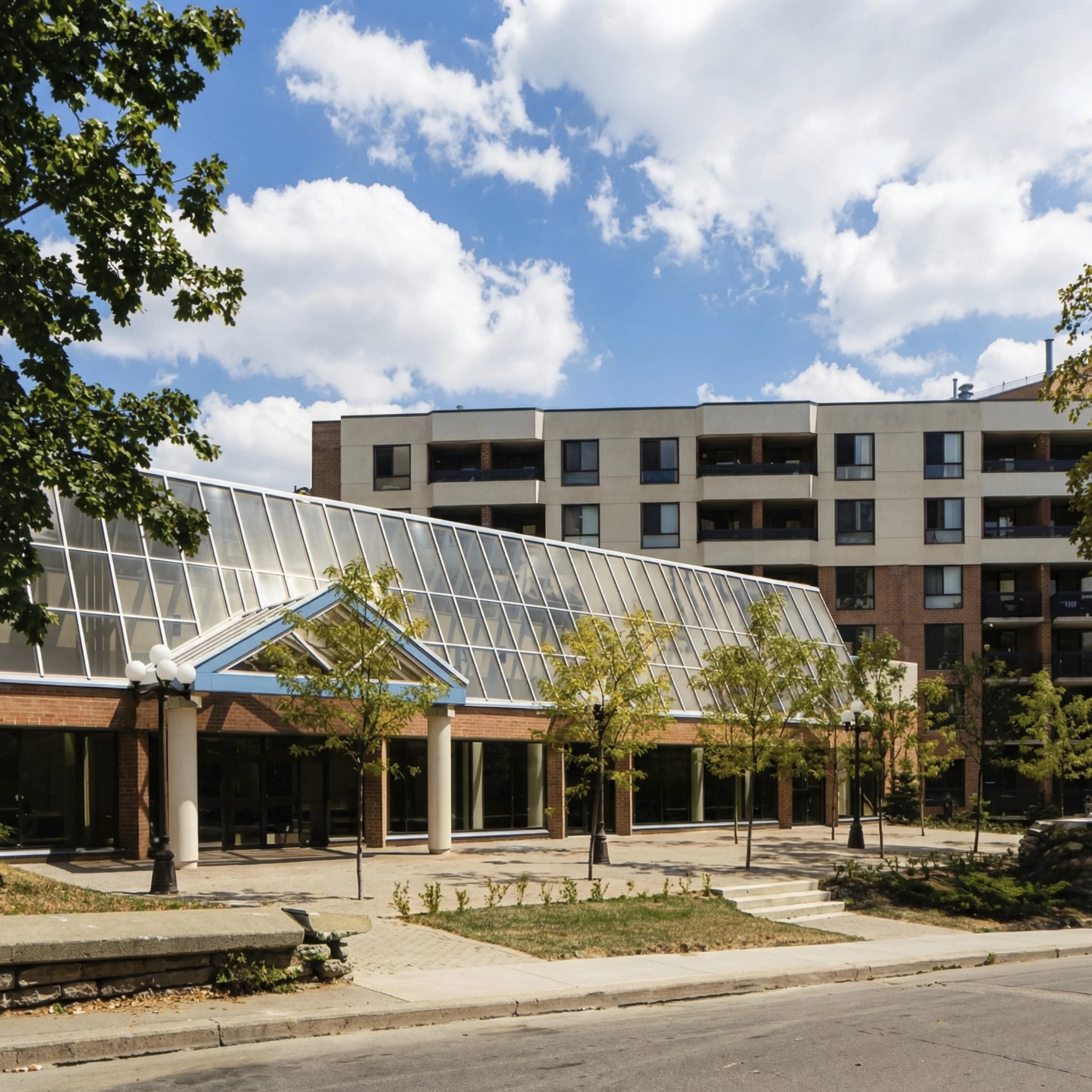
Hellenic Home. Image by Author.
I’m proud of my first design work in the office of Ted Sievenpiper under the agile guidance of Mas Dazai. As a young yet confident intern, I was encouraged to develop my own design for the Hellenic Home for the Aged, on Winona Drive in Toronto. The words vibrant and eclectic accurately describe my design work on this building. A strong grounding of a brick masonry and a scale-reducing rhythm of columns and pilasters provided a human feel and dimension. The building was capped off by two storeys of whiter-than-white quartz-faced precast concrete, which echoed the white marble Greek heritage of its intended inhabitants, and I could feel their pride. After I prepared the design, I saw it presented to the Danforth Avenue community of which I was a part. I drew satisfaction from achieving this first built work, but I received just as much joy from watching the people it would house embrace it as their home.
Fast forward a half a dozen years, and I was now in Guelph in charge of my own studio. If my success in the ‘80s was personal, measured by individual design skill, my 1990s firm had more to do with a networked, collaborative practice. We embraced the power of CAD and client interactions were spread widely through my small staff. The projects remained small- and medium-sized commissions, mostly primary schools, churches and a university building. They were simple designs of modest structures so I could continue to act more as a Master Builder, and my buildings expressed my own design style.
A few months ago, I returned to one of my early buildings, The J. C. Hersey Building at the University of Guelph. I had taken a polychromatic approach to the design, creating variety by brightening the home of Physical Resources to distinguish it from the historic heritage structures to one side and the classic concrete brutalist neighbours elsewhere on campus. I’m happy to say that it stands alone and has certainly held up.
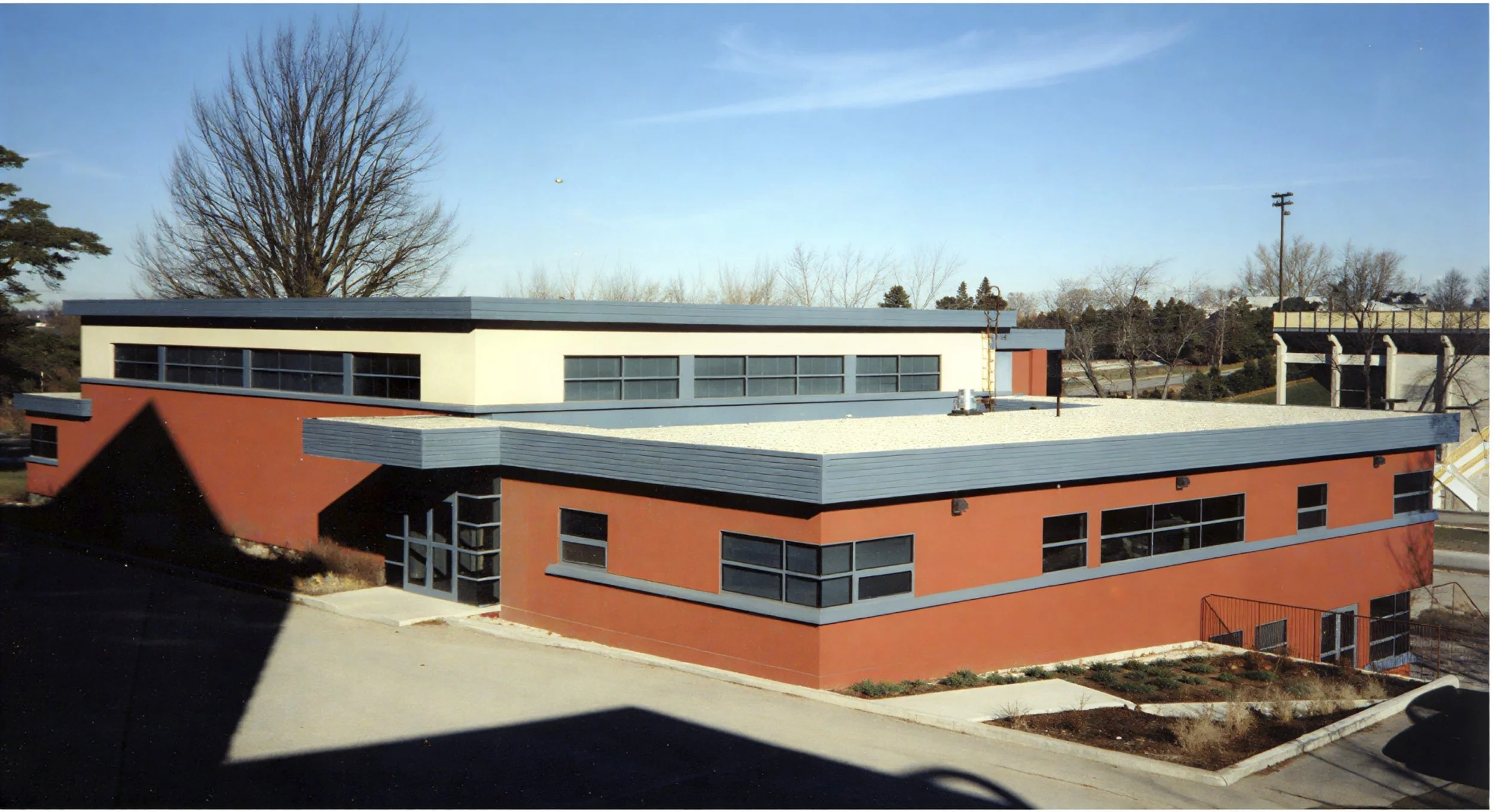
JC Hersey Building. Image by Author.
Before long, I was consulting on building projects that were too complex to be handled by one ego. Adopting a new style of management forced me to work concurrently with many designers, engineers and contractors, breaking down silos. The "self-focused" approach of my personal buildings proved unsustainable in these larger joint projects. I learned to manage teams, work within groups, understand finances, and build relationships, rather than just producing my own work.
It was this project management style of work that drew the attention of The Cooperators Insurance Company, whose management asked me to oversee the renovation of their Guelph Headquarters. My first challenge was to design and manage the construction of their primary corporate senior management floor, which was completed successfully on time, under budget and to the total satisfaction of the staff and senior management. This was followed by the design of the staff cafeteria, The Priory Place Café, which boosted my reputation by being published in Canadian Interiors Magazine. From there, I was tasked with a redesign of all of the other floors in the building and the many other company interiors across the province.
My role now included client interface and satisfaction, along with architectural design, coordination with the interior designers, systems furniture suppliers, engineers, communication, environment, Cooperators’ staff occupant safety, construction management, movers and facilities management and maintenance staff. We used early BIM to coordinate the design teams and construction project management software to administer the headquarters renovation and refurbishment of over 150,000 sq. ft., plus the same again in area within other buildings carried out over 4½ years, while concurrently occupied by over 800 people. What set this work apart was that, in contrast to a corporate standard work environment, each floor was designed as a unique expression of the needs and character of the work group, team or department that would occupy it.
This work forced me to explore new methods of project and team management. I learned that, for the task of renewing an occupied facility, client communication is a priority. This opened me up to other opportunities including a visit to the Steelcase Headquarters in Grand Rapids, Michigan, to discuss their total workplace environment, products and techniques.
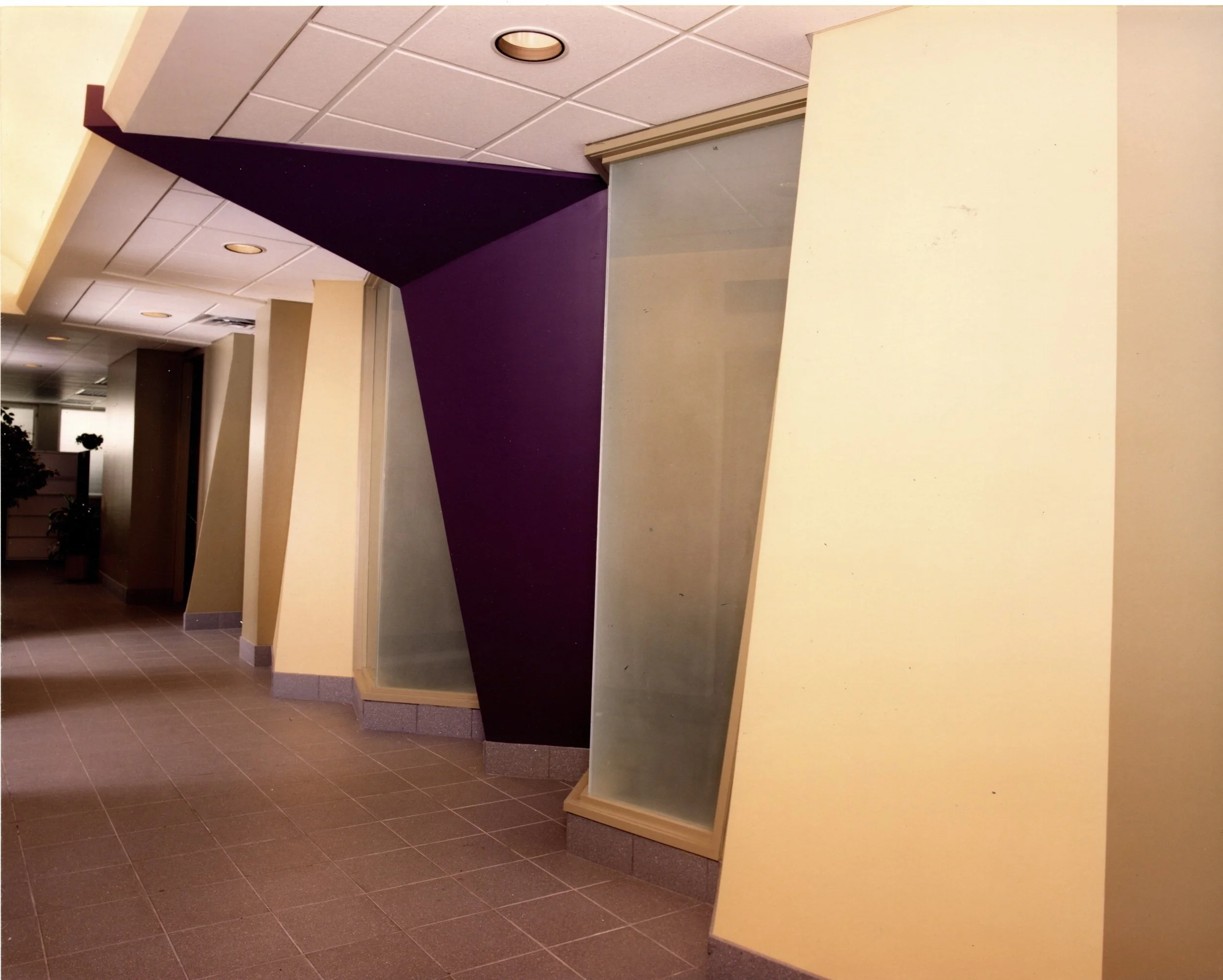
Fractal Wall. Image by Author.
I still maintained my interest in personal design projects. An example of this was the “fractal wall” for the computing department at the Cooperators building. Upon leaving the elevator you are greeted by segmented glass wall that tells the story of two ideas approaching each other resulting in a thought. This “thought” takes the form of an eggplant-coloured shape that rises up from the floor, spreading across the ceiling back towards the elevators that you have just exited. The design was so successful and so nicely summed up the power of computing that it was featured in promotional material to set The Cooperators apart as an employer. They had realized that the quality of their built environment could be used as a business advantage tool to attract quality employees. I was also asked to write stories documenting the meaning of some of the designs I left behind.
After I completed the work at the Cooperators, I built my own house and studio, “Maison de Verre,” in Guelph in 2003. I maintained a small personal practice while consulting on larger projects with diverse teams in many locations across Canada. This broad exposure stirred my interest in connecting with the profession. I joined my first Ontario Association of Architects committee in 2000. I then went on to become the Chair of the Grand Valley Society of Architects and in 2008, I was elected to the Council of the OAA.
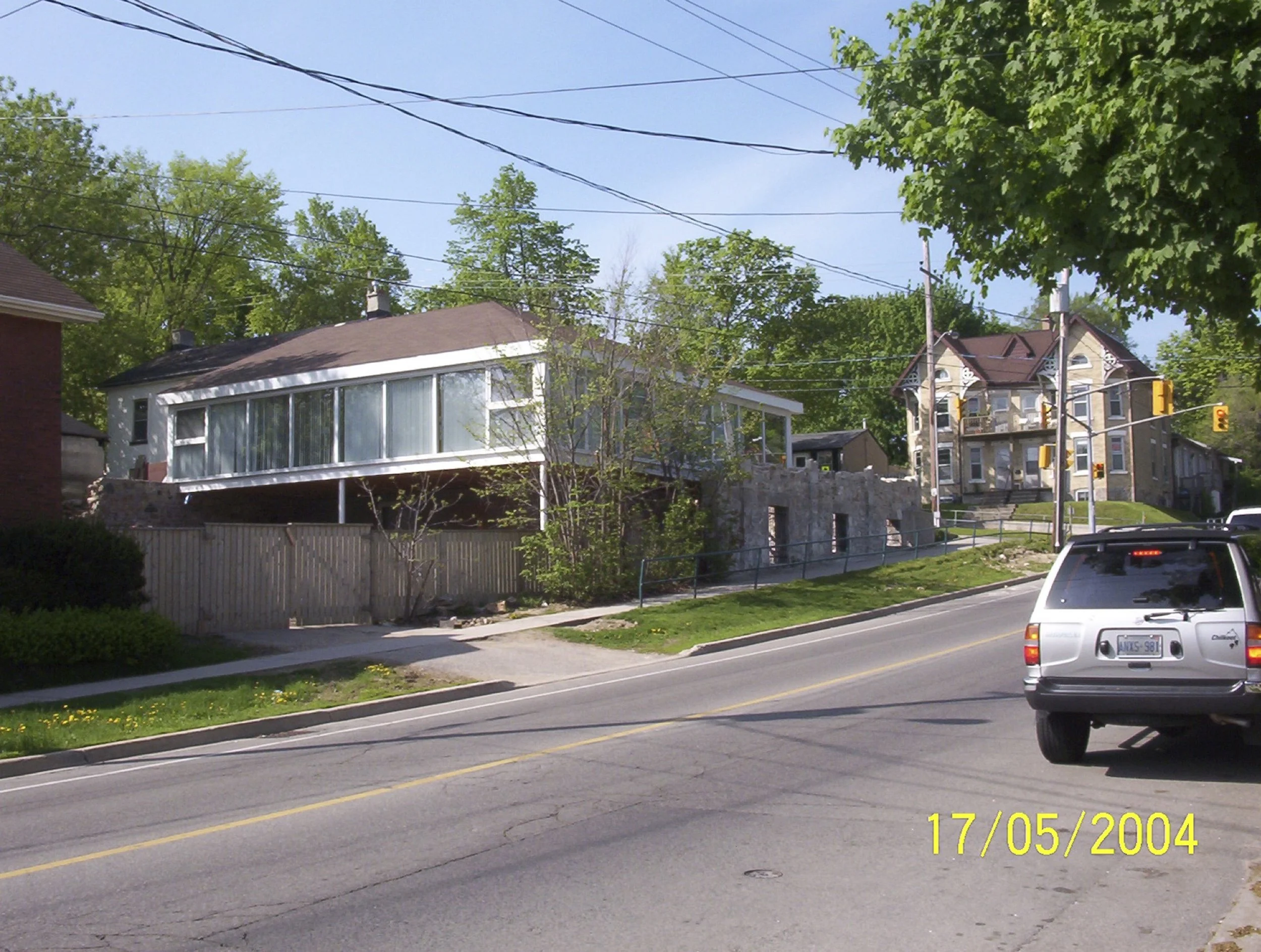
Glass House. Image by Author.
In my career journey I’ve marked the progression with perceptions of expansion and contraction. I began as a co-op student in 1977, when everything seemed open and full of possibility. Then, as an intern in 1984, I spent long hours of meticulous work in an office, an isolating experience in some cases. As a young architect, starting in 1987, I still worked long hours, designing quality architectural work, but now with a family to support and struggling to collect all my fees. As a small practitioner, I was limited by project pursuit costs, and it was difficult even to gain work by quality-based selection. So, I started with locally focused client groups—a mix of small churches, schools, government buildings and offices. It wasn’t easy to maintain a perception of competence in the face of huge firms that dove on every opportunity no matter how small. Then there was the matter of business relationships. I tended to focus my efforts on areas that paid well and shunned the ones that paid little or nothing at all. Fortunately, in the following years, I became more successful as both a designer and a businessman.
Becoming an advocate for the profession was like having all the doors thrown open again. My experience was once again valued and my opinions about the profession mattered. I learned to write and express myself in new and exciting ways. As I progressed through Council Committees and roles, I began to travel more and meet architects at all levels of experience and importance. When, in 2013, I became OAA President, it was at a time when Advocacy for the Profession of Architecture and educating the public on the values of a quality-built environment was widely valued. I completed two 13-city tours of Ontario. Traveled the length and breadth of Canada and connected with professional groups in the United States, Europe, the Asia Pacific, Australia and New Zealand. I was interviewed by the media: print, web-based, Radio and TV. I sat on dozens of architecture-related awards juries. In short, it was an incredible ride for a kid from the farm in Southwestern Ontario.
Today, I’m still involved with professional associations, locally, provincially and nationally. I speak to, and work with, other architects and design professionals as an advocate. I write to express my thoughts on architecture and the profession to an interested and engaged audience. I manage a small virtual architectural practice and consult with many large multidisciplinary firms. My personal projects tend to be as vibrant and eclectic as they were 40 years ago. I’m proud of my contributions to Architecture as a designer and an advocate, and of the awards that I have received. I am looking forward to the OAA Conference, which will be in my backyard in May of this year, in the Kitchener – Waterloo Region and Guelph.
It may sound like I’m looking back on a career, but I’m still looking forward, occupied with new projects as both an Architect and an Advocate for Architecture. To those that know me, thank you for sharing this road with me. For everyone else, I look forward to meeting you.